
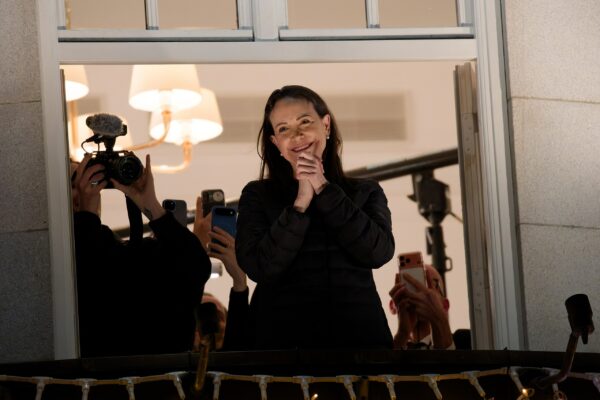
President Donald Trump sidelined Venezuelan opposition figure María Corina Machado as a potential interim replacement for Nicolás Maduro after the dictator’s capture, with White House insiders claiming her fatal mistake was accepting the Nobel Peace Prize rather than deferring the honor to Trump.
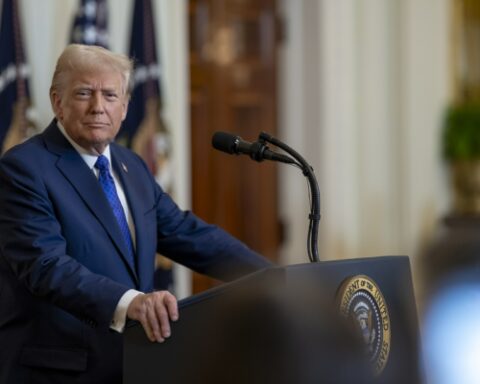
The allegations surfaced after Trump publicly dismissed Machado over the weekend, just days after Maduro and his wife were arrested in a surprise Delta Force operation early Saturday. In remarks following the mission, Trump cast doubt on Machado’s viability as a leader, saying it would be “very tough for her to be the leader” and arguing that she lacks sufficient support and respect inside Venezuela.
Those comments stunned members of Venezuela’s opposition, who had expected Washington to throw its full weight behind Machado, according to reporting by The Washington Post. Instead, Trump made clear he was not convinced she was the right figure to lead the country through a transition.
Citing two people close to the White House, the Post reported that Machado’s handling of the Nobel Peace Prize last year played a decisive role in Trump’s thinking. One source described accepting the award as the “ultimate sin” in Trump’s eyes.
“If she had turned it down and said, ‘I can’t accept it because it’s Donald Trump’s,’ she’d be the president of Venezuela today,” the source told the paper, reflecting the belief among insiders that Machado’s move permanently damaged her standing with the president.
Machado received the Nobel Peace Prize from the Norwegian Nobel Committee in October for what the committee described as her “tireless work promoting democratic rights for the people of Venezuela and for her struggle to achieve a just and peaceful transition from dictatorship to democracy.” When she accepted the award, Machado publicly dedicated the prize to Trump, an effort that insiders say fell short of repairing the perceived slight.
At the time, there was growing support within MAGA circles for Trump to receive the Nobel Peace Prize himself for work done during his second term. However, nominations had already closed before Trump returned to the White House, leaving supporters frustrated that he was again overlooked.
Meanwhile, events inside Venezuela moved quickly. The country’s armed forces have since recognized Maduro’s vice president, Delcy Rodríguez, as acting president. U.S. officials have described the development as opening the door to a “soft transition,” signaling a willingness to allow continuity under close scrutiny rather than an immediate handover to opposition leadership.
Rodríguez struck a conciliatory tone toward Washington, issuing a public statement directed at Trump in which she said the region deserves “peace and dialogue, not war,” and expressed hope for a future agenda of cooperation.
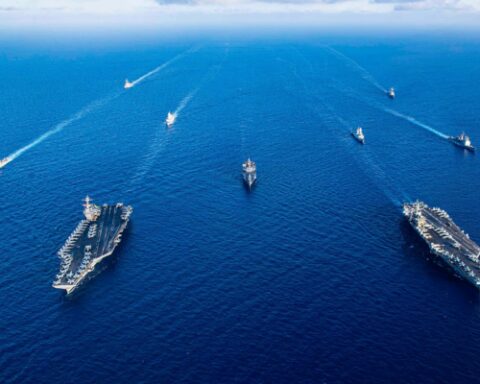
Despite the softer rhetoric, the United States has maintained a visible and forceful posture in the region. Nearly 15,000 U.S. personnel, along with warships, fighter jets and surveillance aircraft, remain positioned across the Caribbean, standing by for further action if needed.
Trump has made clear that Rodríguez’s cooperation is not optional. He has warned that she could face a “bigger” price than Maduro if she fails to comply with American demands, underscoring that while Machado may be out of favor, Washington is still calling the shots as Venezuela’s future hangs in the balance.
[READ MORE: Iran Threatens U.S. Forces as Protests Spread and Trump Warns Regime Against Violent Crackdown]