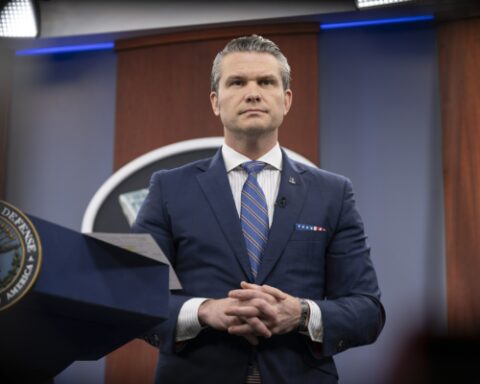

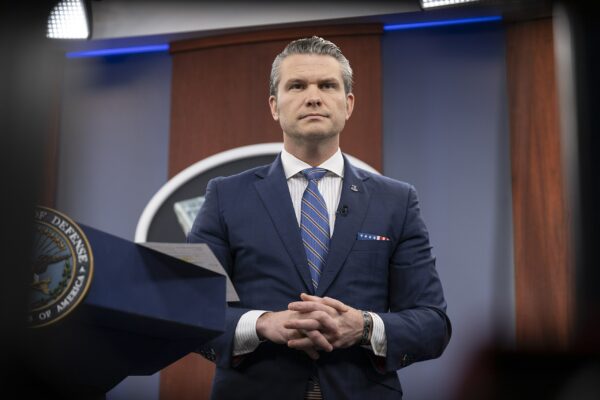
Defense Secretary Pete Hegseth sharply rebuked CNN chief congressional correspondent Manu Raju on Wednesday, accusing him of trying to undermine the Trump administration’s Venezuela operation by fixating on its cost to taxpayers.
Hegseth and Secretary of State Marco Rubio were speaking with reporters on Capitol Hill ahead of classified briefings for lawmakers on the administration’s actions in Venezuela following President Donald Trump’s strike and the capture of Venezuelan leader Nicolás Maduro.
The exchange aired live on CNN’s The Situation Room, where Raju pressed repeatedly for a dollar figure tied to U.S. involvement. He asked how much the mission would cost American taxpayers and how long the financial burden would last.
Rubio pushed back, saying the operation would not cost taxpayers money and noting that developments tied to oil arrangements would not impose a financial burden. When Raju pressed further, Rubio explained that U.S. forces are routinely deployed across the globe and are not sitting idle waiting for action. If they were not operating in the Caribbean, he said, they would be deployed elsewhere.
Rubio pointed out that U.S. forces had just seized a sanctioned vessel tied to the IRGC in another theater, underscoring that American military assets are continuously engaged worldwide. He listed ongoing operations across multiple regions, including the Mediterranean, Middle East and Indo-Pacific, explaining that naval forces operate wherever needed.
As the back-and-forth continued, Hegseth stepped in forcefully, singling out CNN’s line of questioning. He said the cost question is never raised when U.S. forces operate in other parts of the world, such as the Red Sea, the Indian Ocean or the Pacific. But, he argued, the moment forces operate in the Western Hemisphere on a counter-cartel mission and to ensure an indicted individual is brought to justice, critics suddenly demand a price tag.
Hegseth called the question disingenuous and accused the network of searching for any angle to diminish what he described as a major achievement. He said the intent was clear: to undermine the success of the Venezuela mission rather than assess it fairly.
“This is a disingenuous question to begin with,” Hegseth said, accusing CNN of trying to find a way to cast doubt on what he described as one of the most significant military operations ever conducted.
He emphasized that lawmakers in both chambers had just received classified briefings detailing the operation’s sophistication. According to Hegseth, the level of coordination and execution involved is something only the United States is capable of achieving.
The defense secretary framed the mission as a landmark success that delivered a major blow to narcotics trafficking and ensured that an indicted leader would face justice. He said attempts to reduce the discussion to dollars and cents ignored the broader context of U.S. global military responsibilities and the routine nature of deployments.
The tense exchange highlighted the administration’s broader frustration with media coverage it believes minimizes or questions decisive actions taken by the U.S. military. For Hegseth and Rubio, the focus was clear: the Venezuela operation was lawful, effective and part of the United States’ ongoing global posture, not an extraordinary expense requiring special justification.