
President Donald Trump on Friday suggested he could impose tariffs on countries that oppose the United States acquiring Greenland, signaling a willingness to use economic pressure to advance what he described as a critical national security objective.
Trump made the comments during a White House roundtable focused on rural health care, where he first discussed applying tariffs to European allies over prescription drug pricing. The president said he had warned multiple countries that they could face 25 percent tariffs if they failed to pay more for pharmaceuticals, describing a broad and aggressive approach to negotiations.
“I went through country after country,” Trump said. “I just went one after another.”
He then extended that same tactic to Greenland, indicating that nations resisting U.S. efforts to gain control of the territory could also face trade consequences. “I may do that for Greenland on countries if they don’t go along with Greenland because we need Greenland for national security,” Trump said.
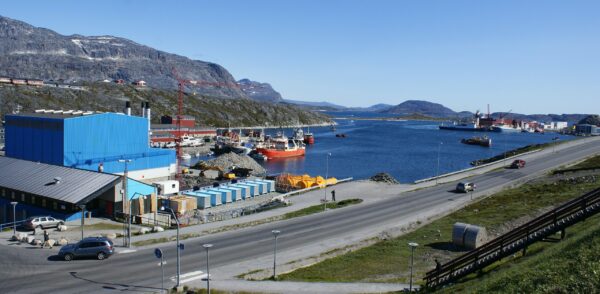
The remarks came amid escalating tensions between Washington and several European governments over the future of Greenland, a Danish territory that has taken on heightened strategic importance. Trump’s comments followed the arrival of troops from multiple European nations, including the United Kingdom, France, Germany, Norway, and Sweden, who deployed to Greenland this week as part of expanded military activity in the region.
Just days earlier, Denmark announced it would increase its military presence in and around Greenland, a move widely seen as a response to Trump’s renewed push for U.S. control of the island. The Arctic territory has long been viewed as strategically valuable because of its location and role in broader defense considerations.
Diplomatic efforts to ease tensions took place Wednesday at the White House, where Vice President JD Vance and Secretary of State Marco Rubio met with Danish and Greenlandic officials. Despite the high-level talks, the two sides failed to reach an agreement regarding Greenland’s future, underscoring the widening divide between the Trump administration and European leaders.
Trump made clear that compromise was not his preferred outcome. Hours before the meeting, the president said that anything short of U.S. control over Greenland was “unacceptable,” reinforcing his long-held position that American interests must come first in the Arctic region.
The president’s willingness to openly discuss tariffs against allies reflects a broader strategy he has used throughout his time in office, leveraging America’s economic power to push foreign governments toward U.S. priorities. In this case, Trump tied Greenland directly to national security, framing control of the territory as essential rather than optional.
While European governments have resisted Trump’s proposals, the administration’s latest comments suggest the issue is far from settled. The combination of military movements, diplomatic meetings, and the threat of economic retaliation highlights how seriously the White House is taking the matter.
As tensions continue to rise, Trump’s message remains consistent: the United States will not hesitate to use its leverage — economic or otherwise — to secure what he believes are vital strategic interests. Greenland, in Trump’s view, sits squarely at the center of that calculation, even if it puts Washington on a collision course with longtime allies.