
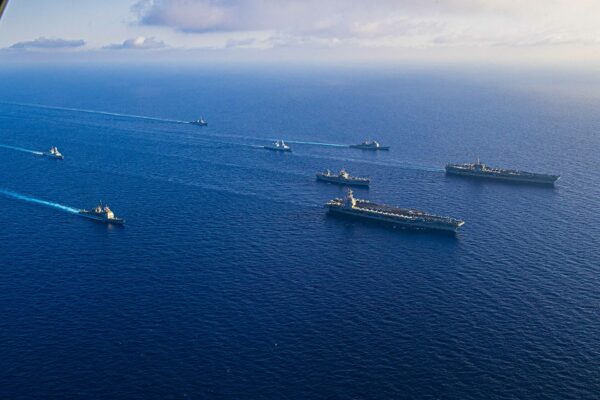
The Trump administration is now reportedly weighing a dramatic escalation in its efforts to bring about regime change in Cuba, including the possibility of imposing a total blockade on oil imports to the island nation, according to three people familiar with the internal discussions.
The proposal, which has been pushed by critics of the Cuban government inside the administration and backed by Secretary of State Marco Rubio, remains under review. No final decision has been made, but the oil blockade is among several options that could be presented to President Donald Trump as part of a broader strategy to force an end to Cuba’s communist government, the sources said.
Cutting off all oil shipments would go further than Trump’s announcement last week that the United States would halt Cuba’s imports of Venezuelan oil, which had long served as Havana’s primary crude supplier. That move alone has already intensified pressure on the island’s fragile economy.
However, officials remain divided over whether a full oil blockade is necessary. According to all three sources, the loss of Venezuelan oil — along with Cuba’s ability to resell portions of those shipments for foreign currency — has already significantly constrained the economy. Some inside the administration argue that completely blocking oil imports could push the situation into a full-blown humanitarian crisis, a risk that has prompted internal resistance to taking the step.
Even so, the discussions reflect how far the administration is willing to go in confronting governments it views as hostile in Latin America. One person familiar with the deliberations described energy as the decisive pressure point, calling it the “chokehold” needed to break the regime. That source said the administration views the fall of Cuba’s communist government, which has ruled since the 1959 revolution, as a realistic near-term outcome.
Any oil blockade would be justified under the 1994 LIBERTAD Act, commonly known as the Helms-Burton Act, which codified the U.S. embargo on Cuban trade and financial transactions.
Cuba’s embassy in Washington declined to comment on the reports. A White House spokesperson also did not directly address whether a total oil blockade is under consideration.
Cuba imports roughly 60 percent of its oil supply, according to the International Energy Agency. Until recently, Venezuela supplied the bulk of that oil. But those shipments have largely dried up after the Trump administration began seizing sanctioned cargoes. Mexico has since emerged as Cuba’s main supplier, though those shipments are sold at market rates and are not expected to resolve the island’s worsening energy shortages.
The administration’s focus on Cuba has intensified since the U.S. operation that captured Venezuelan leader Nicolás Maduro. Officials argue that Cuba’s economy is now at its weakest point in years, making the regime more vulnerable than ever. Trump and Rubio have both expressed confidence that the loss of Venezuelan support has placed Havana on the brink of collapse.
For Cuban exiles in Miami, the prospect of toppling the communist government represents the fulfillment of a decades-long goal. Many have advocated for democratic change on the island since Fidel Castro took power after overthrowing Fulgencio Batista in 1959. Rubio, whose parents fled Cuba, has long supported hardline measures against the regime.
Conditions inside Cuba have continued to deteriorate, with widespread blackouts and shortages of food and basic goods. Yet the government has survived decades of U.S. sanctions and endured the collapse of the Soviet Union. Some officials worry that a sudden regime collapse could spark mass migration and destabilize the broader Caribbean region.
Still, hardline Republicans have embraced the idea of fully cutting off Cuba’s oil supply. Sen. Rick Scott of Florida said last week that no petroleum should be allowed to reach the island, underscoring the growing appetite among conservatives for maximum pressure on Havana.