
Energy Secretary Chris Wright said Thursday that a dramatic spike in oil prices to $200 a barrel is unlikely in the near term, even as the ongoing war involving the United States, Israel and Iran fuels uncertainty in global energy markets and raises concerns about rising costs for Americans.
Speaking in an interview with CNN anchor Kate Bolduan, Wright was pressed on whether the escalating conflict could drive energy prices sharply higher, a possibility that has been floated by Iran amid the mounting tensions.
Bolduan pointed to the immediate economic pressure already being felt by consumers and businesses alike.
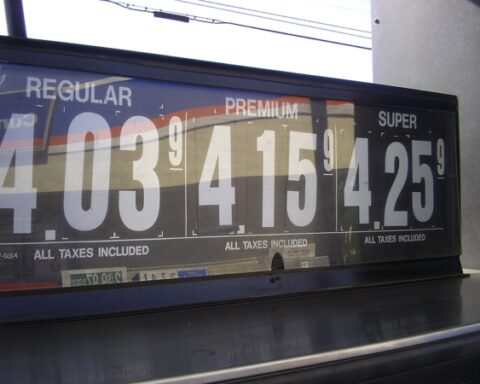
“In this few weeks, the question is how hard is the pain and how much are people going to have to endure?” she asked. “Gas prices are going up, jet fuel prices are jumping, and CEOs are saying that ticket prices are also going to go up.”
She also referenced Iran’s warning that the world should brace for oil reaching $200 per barrel and asked Wright directly whether Americans should prepare for such a scenario.
“You don’t agree with Iran on anything, but do you agree the people need to be prepared for that?” Bolduan asked.
Wright did not dismiss the possibility outright but suggested such a spike is unlikely in the current environment. At the same time, he acknowledged that the conflict has created short-term disruptions in energy markets.
“We’re going through short-term energy disruption for just huge long-term gain,” Wright said. “You’re seeing Iran’s behavior. They’re attacking every country in the region.”
Bolduan followed up by asking whether those disruptions could still push oil toward the $200 mark in the near term.
“Could that in short-term mean $200 a barrel?” she asked.
Wright responded cautiously.
“Um, I would say unlikely,” he said. “But we are focused on the military operation and solving a problem. I’m not gonna guess on short-term trading. That’s based on psychology more than flows of oil.”
According to Wright, the broader fundamentals of the global energy market remain strong, even as geopolitical tensions introduce volatility.
“The world is very well supplied with oil right now,” he said.
Wright also pointed to the United States’ energy production as a stabilizing force during the current crisis. He credited the administration’s policies for expanding domestic output in both oil and natural gas.
“Thanks to President Trump’s leadership, we’re by far and away the world’s largest oil producer, by far and away the world’s natural gas producer,” Wright said. “Both of those are growing.”
Still, the conflict has already begun to ripple through global markets and consumer costs. Higher fuel prices can affect everything from airline tickets to the price of goods transported by truck or ship, meaning energy disruptions tied to geopolitical conflict often reach well beyond the battlefield.
Iran signaled Wednesday that the ongoing war could push prices dramatically higher, warning that the world should be prepared for oil reaching $200 a barrel.
The Trump administration responded the same day with a move aimed at cushioning the economic impact. Officials announced plans to release 172 million barrels of oil from the Strategic Petroleum Reserve, a step designed to help stabilize supply and limit price spikes.
The reserve, maintained as an emergency stockpile, has historically been used during major disruptions to global oil supply. By releasing additional barrels into the market, the administration hopes to reduce the pressure that conflict-driven uncertainty can place on energy prices.
For now, Wright emphasized that the administration remains focused on addressing the broader conflict while relying on America’s energy production to help steady the market.
But the discussion surrounding $200 oil underscores a familiar reality in times of war: even battles fought far from home can quickly affect the daily lives of Americans, particularly when energy supplies — the lifeblood of modern economies — become entangled in geopolitical conflict.