
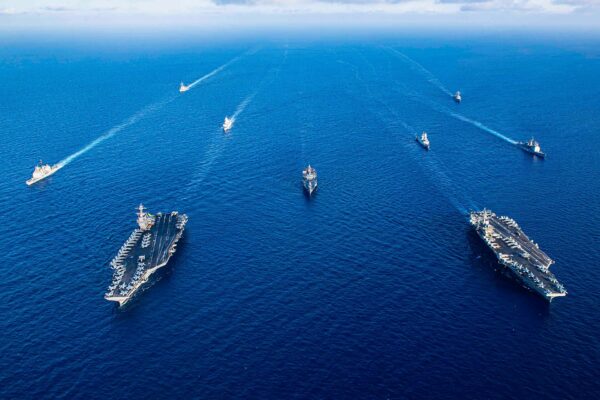
Former U.S. Navy Secretary Kenneth Braithwaite said Friday there is “no doubt” the United States could force passage through the strategically critical Strait of Hormuz, even as broader questions remain about the political will and long-term consequences of doing so.
Speaking in an interview with Anderson Cooper, Braithwaite expressed confidence in the military’s capabilities. “There’s no doubt that the United States Navy could run those straits,” he said. But he quickly pointed to a more complicated reality, adding that such an action ultimately depends on “political intent and national will.”
The Strait of Hormuz, a narrow but vital waterway responsible for transporting roughly 20 percent of the world’s oil, has remained blocked since joint U.S. and Israeli strikes on Iran late last month. The disruption has had immediate economic consequences, contributing to rising gas prices and increasing pressure on policymakers to find a resolution.
While the military question may be relatively straightforward, the geopolitical situation is anything but. Iran has denied that negotiations are underway to end the conflict, even as both sides have issued separate demands in recent days regarding a potential ceasefire. The lack of clear diplomatic progress has left uncertainty hanging over global markets and the stability of energy supplies.
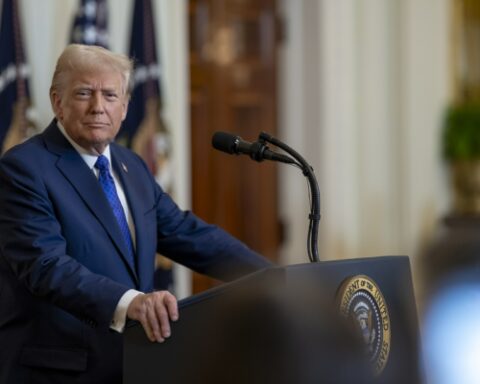
President Donald Trump indicated Thursday that there may be signs of movement, noting that Iran had allowed 10 oil-carrying ships to pass through the strait. Iranian officials have also stated that “non-hostile vessels” may be permitted to use the channel, a development that could signal a partial easing of restrictions, though not a full reopening.
Even so, questions remain about who ultimately controls the waterway and under what conditions. When asked whether Iran would maintain control of the strait following a ceasefire, Braithwaite suggested that outcome would likely depend on broader political changes within the country.
“I believe they do unless there’s a regime change,” he said, adding that removing the current leadership in Tehran would be the only way to ensure a favorable long-term outcome for the United States.
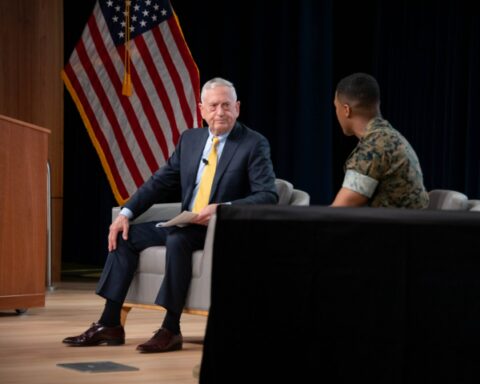
That perspective was echoed, in part, by former Defense Secretary Jim Mattis, who offered a stark assessment earlier in the week. Mattis warned that ending the conflict without resolving control of the strait could leave Iran in a stronger position, potentially allowing it to exert influence over global shipping.
“Iran right now, if we declared victory, they would now say they own the strait,” Mattis said. “You’d see a tax for every ship that goes through.” He added that the situation presents difficult choices, noting, “We’re in a tough spot… I can’t identify a lot of options.”
Earlier this month, Trump issued a firm ultimatum to Iran: reopen the strait or face potential strikes on energy infrastructure. Since then, however, the administration has stepped back, extending a pause on such action through April as discussions continue.
The unfolding situation highlights a familiar tension in foreign policy. While military capability may offer immediate options, the broader consequences—economic, political, and strategic—are far less predictable. As leaders weigh their next steps, the challenge remains not just what can be done, but what should be done, and at what cost.