
Israel launched a sweeping bombing campaign across Lebanon on Wednesday, even as a recently announced ceasefire between the United States and Iran had taken effect, underscoring the fragile and often uncertain nature of agreements in an increasingly volatile region.
The Israel Defense Forces (IDF) said in a post on X that it had “completed the largest coordinated strike across Lebanon since the start of Operation Roaring Lion,” targeting Hezbollah headquarters, military infrastructure, and command centers. The масштаб of the operation signaled a significant escalation, even as broader diplomatic efforts suggested a pause in hostilities elsewhere.
Reports indicate that President Donald Trump and Israeli Prime Minister Benjamin Netanyahu had agreed ahead of the ceasefire that military operations in Lebanon could continue, according to Axios. That understanding appears to have shaped events on the ground, where fighting has persisted despite expectations of de-escalation tied to the U.S.-Iran agreement.
The human toll has been substantial. According to The Associated Press, citing Lebanon’s Health Ministry, at least 89 people were killed and more than 700 wounded in Wednesday’s strikes alone. Since the conflict began in March, more than 1,500 people have been killed and roughly one million displaced, highlighting the growing humanitarian crisis.
Complicating matters further, Hezbollah had reportedly halted its attacks early Wednesday as the ceasefire took effect, according to Reuters. A senior Hezbollah lawmaker, Ibrahim al-Moussawi, said the group believed it was included in the ceasefire arrangement and had acted accordingly, accusing Israel of violating the agreement and carrying out widespread attacks across Lebanon.
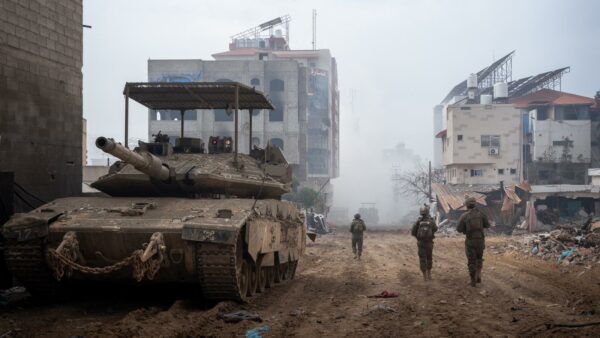
Images and video emerging from the region show extensive destruction, including flattened residential areas and heavily damaged apartment buildings. The Lebanese Red Cross said it deployed 100 ambulances to transport the wounded, a stark indication of the scale of the aftermath.
Israel’s long-term objectives in the conflict have also come into sharper focus. Defense Minister Israel Katz stated in late March that Israel intends to secure territory up to the Litani River in southern Lebanon. According to reports, the plan includes eliminating Hezbollah’s Radwan forces in the area and destroying weapons infrastructure.
If achieved, such a move would effectively divide Lebanon geographically, a development with potentially far-reaching consequences for the region’s stability. The offensive, which began on March 2, has reportedly faced challenges as Hezbollah adapted its tactics.
Hezbollah fighters are said to have drawn lessons from the Russian Federation’s military actions in Ukraine, particularly the use of first-person view drones. Unverified battlefield footage has shown advanced Israeli vehicles, including Merkava tanks, being targeted by fast-moving drones equipped with shaped-charge warheads.
Lebanon itself remains a complex and diverse country, not solely defined by a single religious identity. A U.S. Department of State report estimates that approximately 30.7 percent of the population is Christian, and the country’s president, Joseph Aoun, is also Christian.
As the conflict continues, the situation reflects the difficult balance between military objectives and the broader consequences of prolonged fighting. Even as ceasefires are announced and diplomatic efforts advance, events on the ground suggest that the path to lasting stability remains uncertain — and that the costs of continued escalation are being felt most acutely by civilians caught in the crossfire.