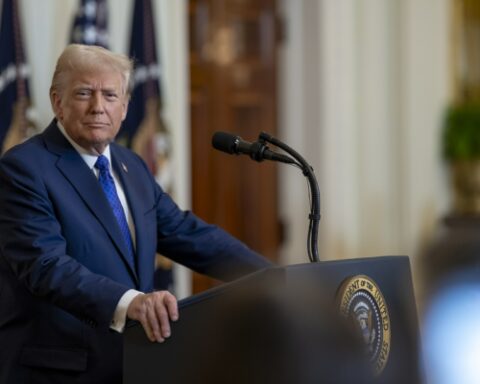

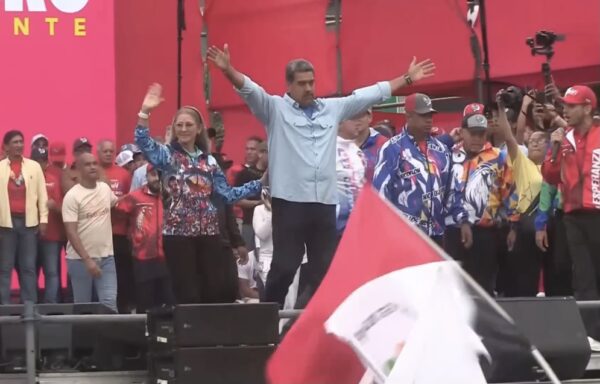
An MSNBC analyst drew sharp comparisons between President Donald Trump’s approach to Venezuela and the tactics of a fictional crime family, as liberal commentators reportedly weighed in on the administration’s escalating pressure campaign against the socialist government of Venezuelan President Nicolás Maduro.
During Friday’s episode of Morning Joe, Washington Post columnist Eugene Robinson joined diplomat and author Richard Haass to discuss rising tensions between the United States and Venezuela. The conversation came as the Trump administration continues to strike vessels it says are transporting drugs from Venezuela toward the United States.
Trump administration officials have accused Maduro of leading what they describe as a drug-smuggling operation. Those accusations have fueled an aggressive posture from Washington, with the White House emphasizing enforcement actions aimed at disrupting narcotics trafficking.
Haass, writing in an essay for Project Syndicate, criticized what he described as an “unconstrained presidency,” arguing that Trump’s approach clashes with long-standing American political traditions. Haass wrote that checks and balances are central to U.S. democracy, insisting that the three branches of government are meant to govern jointly and prevent any one branch from dominating. According to Haass, that system has broken down, with Trump acting decisively while others fail to respond.
On Friday’s program, Haass argued that despite widespread criticism of Maduro’s rule and ongoing challenges to his election victory from opposition figures and international observers, regime change is likely not the Trump administration’s primary objective. Instead, Haass suggested the focus is on halting drug-smuggling operations and opening Venezuela to American companies interested in accessing the country’s oil resources.
Maduro said earlier this week that Venezuela is “ready” to engage in talks with the United States on combating drug trafficking. Haass argued that such statements indicate Maduro could remain in power while striking a deal that benefits both sides, particularly U.S. energy interests.
Robinson largely agreed with that assessment but framed the administration’s strategy in more theatrical terms. He compared the pressure campaign to the tactics depicted in The Godfather, the 1972 film centered on an Italian-American mafia family and based on the novel by Mario Puzo. Robinson quipped that Maduro might as well have woken up to find a horse head in his bed, characterizing the U.S. approach as a “Godfather-style method of persuasion.”
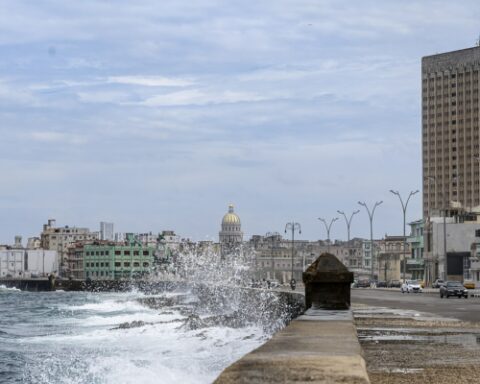
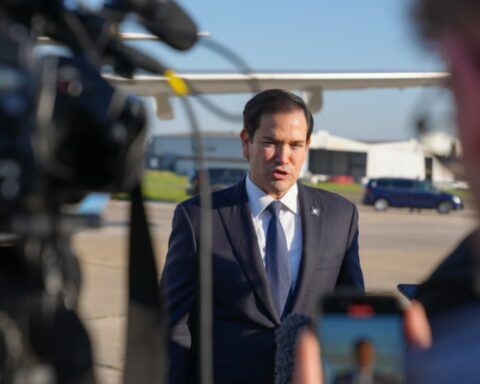
Robinson went on to say that such an arrangement sounded like the kind of deal Trump might accept, arguing it appeared consistent with the president’s broader approach to foreign policy. However, Robinson speculated that Secretary of State Marco Rubio would strongly oppose any agreement that leaves Maduro in power. Robinson suggested Rubio’s interest in removing Maduro is tied in part to Venezuela’s support for Cuba, noting that Cuban leaders rely heavily on Venezuelan oil and that the island’s economy would be in even worse shape without it.
The discussion highlighted a familiar divide between the Trump administration’s hardline actions and the media’s skeptical reaction, as commentators debate whether pressure, deal-making, or regime change is ultimately driving U.S. policy toward Venezuela.
[READ MORE: Trump Signals Tougher Stance on Putin, Shares Op-Ed Calling Russian Leader Obstacle to Peace]