
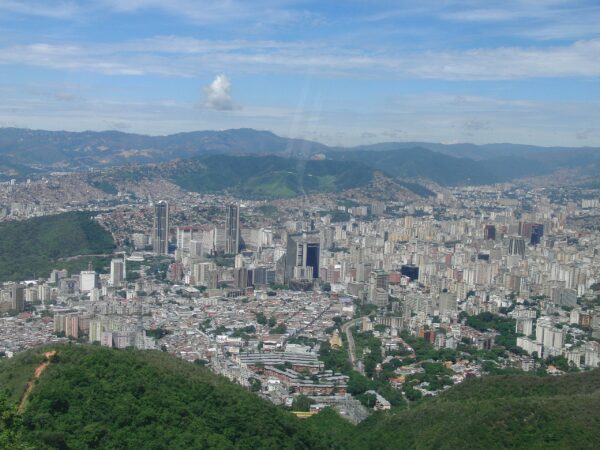
A team of American diplomats arrived in Venezuela on Friday, marking the first time U.S. officials have entered Caracas since the capture of socialist strongman Nicolás Maduro and signaling a major new phase in the Trump administration’s approach to the crisis-ridden country.
Acting U.S. Ambassador to Colombia John McNamara traveled to the Venezuelan capital alongside security personnel from the Venezuela Affairs Unit, which operates out of Colombia. According to CNN, the delegation is conducting an initial assessment as Washington considers a phased resumption of diplomatic operations in the country.
The visit comes as the State Department works toward reopening the U.S. embassy in Caracas. The United States withdrew its diplomats from Venezuela in 2019 during President Donald Trump’s first term, amid severe political instability and after Maduro ordered American officials to leave the country.
President Trump said last weekend that the United States would assume control of Venezuela for the foreseeable future following a dramatic U.S. military and law enforcement operation that resulted in Maduro and his wife being taken into U.S. custody to stand trial. Friday’s diplomatic visit underscores the administration’s shift from direct action to longer-term oversight and reconstruction.
The State Department’s return also follows Trump’s announcement earlier Friday that the Venezuelan government cooperated with his request to release political prisoners. Trump said that cooperation prompted him to cancel a planned “second wave of attacks” on the country, framing the move as a direct response to compliance by authorities in Caracas.
Despite Maduro’s capture, Venezuela remains under the control of officials loyal to the socialist regime. Interim President Delcy Rodríguez has continued to publicly support Maduro, insisting he remains the country’s rightful leader. The government has also intensified its crackdown on dissent, deploying paramilitary forces throughout Caracas to search for Venezuelans accused of supporting the U.S. raid.
Trump has not specified how long the United States will oversee Venezuela, but he suggested earlier this week that American involvement could last for years. He described the effort as both strategic and economic, emphasizing Venezuela’s vast oil resources.
“We will rebuild it in a very profitable way,” Trump said. “We’re going to be using oil, and we’re going to be taking oil. We’re getting oil prices down, and we’re going to be giving money to Venezuela, which they desperately need.”
Energy Secretary Chris Wright said the administration plans to control Venezuelan oil sales and use that control as leverage to force reforms. Wright argued that without authority over oil revenues, meaningful change would be impossible.
“If we control the flow of oil, the sales of that oil, and the flow of the cash that comes from those sales, we have large leverage,” Wright said. “But without large leverage … you don’t get change.” He added that Venezuela should ultimately become “a wealthy, prosperous, peaceful energy powerhouse.”
Secretary of State Marco Rubio, who is playing a central role in overseeing U.S. policy toward Venezuela, outlined the administration’s roadmap earlier this week. Rubio said the immediate priority is stabilizing the country. The next phase would focus on reviving the Venezuelan economy by ensuring fair access for American, Western, and allied companies. The final objective, he said, is helping Venezuela rebuild its civil society.
Later Friday, Trump, Rubio, Wright, and Interior Secretary Doug Burgum are scheduled to meet at the White House with executives from major U.S. oil companies. American energy firms are expected to invest at least $100 billion to help rebuild and modernize Venezuela’s oil industry, a cornerstone of the administration’s plan to reshape the country under U.S. oversight.