
A recent rise in oil and gasoline prices tied to the ongoing U.S. military strikes on Iran has put the Trump administration in a defensive posture, as officials argue the increases are temporary and outweighed by broader geopolitical goals.
Low fuel costs have long been a central element of the White House’s message to voters. As prices climb, administration officials have emphasized that they are actively working to stabilize the market and believe the increases will be short-lived.
Press Secretary Karoline Leavitt addressed the situation Thursday in a post on the social platform X, reassuring Americans that the administration’s energy team had anticipated potential disruptions.
“Rest assured — President Trump’s entire energy team, from the White House to the National Energy Dominance Council to Secretaries Wright and Bessent, have been planning for this, and they are all over it!” Leavitt wrote.
During a press briefing Wednesday, Leavitt reiterated that the administration is focused on maintaining price stability despite the developments overseas.
“The administration is wholeheartedly focused on keeping prices stable,” she said.
Leavitt also expressed confidence in the strength of the U.S. economy, suggesting it can withstand the temporary market fluctuations tied to the military operation in Iran.
“It is the president’s belief and his economic team’s belief that the economy continues to be very strong. It’s robust and will be able to weather any of the temporary impacts of Operation Epic Fury,” she said.
Energy Secretary Chris Wright echoed that message during an appearance on Fox News, describing the recent rise in prices as a temporary bump.
Wright said the increase represents a “very small price to pay” in light of the administration’s broader objectives related to Iran.
President Donald Trump himself also downplayed concerns about rising fuel costs, expressing confidence that prices will soon come down.
“I don’t have any concern about it,” Trump told Reuters on Thursday. “They’ll drop very rapidly when this is over, and if they rise, they rise, but this is far more important than having gasoline prices go up a little bit.”
At the same time, Reuters reported that the Treasury Department is preparing to announce additional steps aimed at lowering energy prices. The report did not specify what actions might be taken but suggested that one possible focus could involve the oil futures market.
Earlier in the week, Trump also moved to address the instability caused by the conflict by ordering the government to provide risk insurance to ships traveling near Iran. The waters around the region have become increasingly dangerous due to the ongoing military confrontation.
The president also said the U.S. Navy would escort oil tankers if necessary to ensure safe passage through the area.
According to Wright, companies have not yet requested the administration’s escort assistance.
Iran’s proximity to the Strait of Hormuz adds to the stakes. Roughly 20 percent of the world’s oil consumption typically flows through the narrow channel each day, though that movement has halted during the conflict.
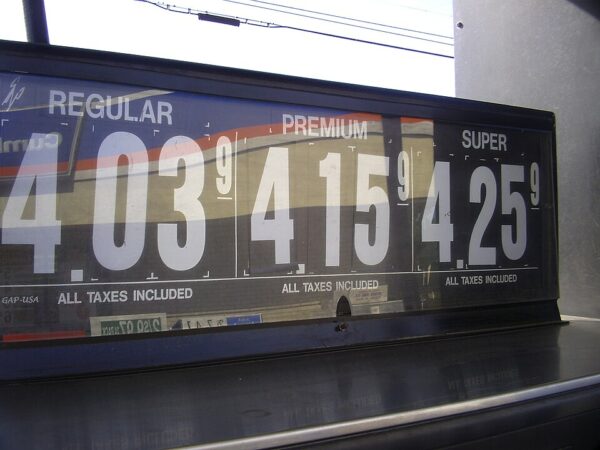
The disruption has contributed to rising prices. As of Thursday, the average U.S. gasoline price stood at $3.25 per gallon. That figure represents an increase of nearly 27 cents from a week earlier and 36 cents higher than a month ago.
Oil prices have climbed as well. The international benchmark Brent crude has risen to more than $84 per barrel, compared with about $71 per barrel a week earlier.
Administration officials have pointed to strong domestic oil production and the seizure of Venezuelan oil as factors that could help mitigate the impact. However, some analysts have expressed skepticism about how quickly those factors might affect global supply.
Patrick De Haan, head of petroleum analysis at GasBuddy, said that producers are unlikely to adjust production decisions based on short-term developments.
“Oil producers probably aren’t going to make decisions for next month based on one day of developments,” De Haan said.
He also noted that Venezuela would require “years of investment” before its oil output could offset disruptions tied to Iran.
Despite the recent increase, gasoline prices remain well below their peak of more than $5 per gallon reached in 2022 after Russia’s invasion of Ukraine.
Still, the rise comes at a challenging political moment. The Trump administration has emphasized lower energy costs in recent months, particularly as electricity prices have climbed.
With midterm elections approaching, the temporary surge tied to the Iran conflict has complicated the White House’s ability to highlight lower fuel costs as a policy achievement.
Politico reported Thursday that officials inside the administration are feeling pressure to find ways to reduce gasoline prices.
According to the outlet, one energy executive said Wright and other advisers “are getting screamed at to find some good news.”
Leavitt dismissed that characterization, describing the report as “sensationalist, unverified gossip.”
Some analysts have suggested that if supply disruptions persist, governments could tap into strategic oil reserves. Andrew Lipow, president of Lipow Oil Associates, said that the United States and other countries could consider such a move if the situation drags on.
Experts also note that seasonal trends could help bring prices down before November’s elections.
De Haan said gasoline prices typically rise during the spring and summer months as travel demand increases, before falling again in the fall.
“It might be a little bit of a stretch to think that prices would still be impacted or be high in the fall, because the natural direction is downward,” he said.
[READ MORE: Analysts Warn U.S. Munitions Could Face Strain if Iran Conflict Extends Beyond Initial Timeline]