
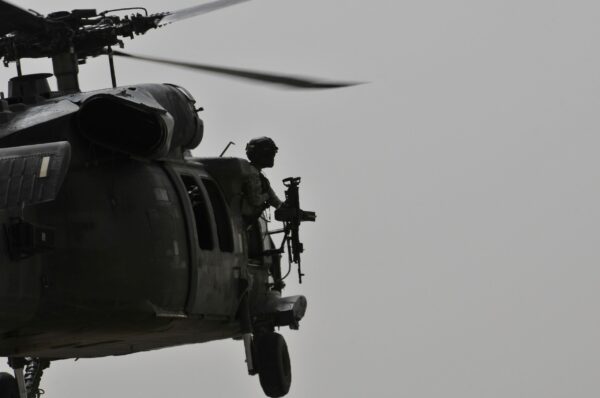
Two U.S. military HH-60W helicopters came under Iranian fire during a high-risk search-and-rescue operation over Iran, underscoring the growing dangers facing American forces as the conflict continues to escalate.
According to a U.S. official who spoke with NBC News, the helicopters were deployed to recover crew members from a downed F-15E Strike Eagle fighter jet that had been shot down over Iranian territory on Friday. The incident marks the first confirmed loss of a U.S. combat aircraft in hostile territory since the conflict began last month, a development that highlights how quickly the situation has intensified.
Despite coming under fire during the mission, all U.S. service members aboard the rescue helicopters were reported safe. The operation successfully recovered one member of the F-15E crew, while efforts remain ongoing to locate the second individual, whose status is still unknown. U.S. forces are continuing what has been described as an intensive recovery effort.
The episode illustrates both the complexity and the risks of conducting operations deep inside hostile territory. Search-and-rescue missions are among the most dangerous military undertakings, often requiring personnel to enter contested airspace under uncertain conditions, where even small-scale resistance can quickly turn deadly.
Open-source imagery circulating online appeared to show U.S. helicopters operating over Iran alongside C-130 tanker aircraft, which were reportedly used to refuel the helicopters midair. Footage shared by major networks, including NBC and CNN, showed the refueling operation taking place, offering a rare glimpse into the logistical demands of such missions.
Additional video, reportedly captured from the ground in Iran, appeared to show one of the helicopters taking small arms fire while flying low across a field. Analysts reviewing the footage suggested the gunfire may have come from local police. The clip was widely circulated on social media and drew attention from journalists tracking the conflict in real time.
While the rescue mission ultimately succeeded in extracting one crew member, the broader circumstances serve as a stark reminder of how quickly localized engagements can expand. Even limited operations can expose U.S. personnel to unpredictable threats, particularly in areas where control of the airspace and ground conditions remains contested.
Compounding the situation, a separate U.S. Air Force A-10 Warthog also crashed in the Persian Gulf region near the Strait of Hormuz around the same time as the F-15E incident. The pilot of that aircraft was safely recovered, but the dual incidents highlight the mounting operational strain in the region.
As the conflict unfolds, these events point to the real-world consequences of sustained military engagement. While officials continue to emphasize mission success and personnel safety, each new incident adds another layer of risk—not just for those directly involved, but for the broader stability of the region.
For now, U.S. forces remain focused on completing the recovery mission and ensuring the safety of their personnel. But the challenges on display—from contested airspace to ground fire and aircraft losses—suggest that even limited operations carry significant stakes, raising ongoing questions about how far the conflict may go and what it will ultimately cost.
[READ MORE: Cuba Announces Mass Prisoner Release as U.S. Pressure Campaign Intensifies]