
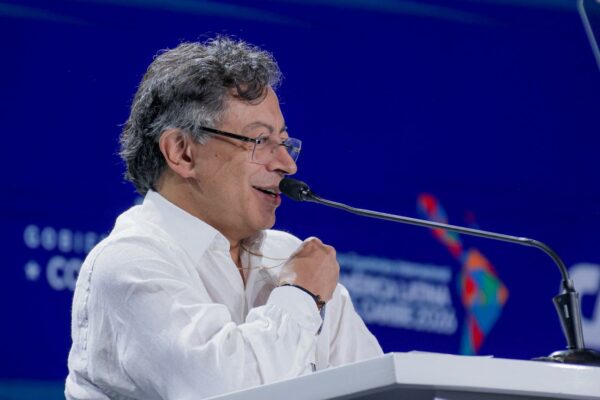
Colombian President Gustavo Petro sparked widespread outrage on Sunday after posting the phrase “Heil Hitler” on social media in response to an opinion column that supported a conservative candidate in the country’s upcoming presidential runoff election.
The remark immediately drew condemnation from international organizations, Israeli officials, and critics who argued that invoking a Nazi slogan crossed a line in an already heated political environment.
The controversy erupted just weeks before Colombia’s June 21 presidential runoff election, a contest that has become one of the most closely watched political races in Latin America. The conservative opposition candidate currently enters the final stretch of the campaign as the front-runner, setting the stage for a potentially significant shift in the country’s political direction.
Among the first organizations to respond was the New York-based Anti-Defamation League, which sharply criticized Petro’s post.
“The president of Colombia posted, ‘Heil Hitler.’ In 2026,” the organization wrote on X.
“An elected head of state shouldn’t have to be told why posting a Nazi slogan is monstrous and unacceptable. There is no excuse for it and no context that justifies it,” the group added.
The reaction quickly spread beyond advocacy organizations and into diplomatic circles.
Israeli Ambassador to the United Nations Danny Danon also condemned Petro’s remarks, arguing that the Colombian leader had crossed a clear moral boundary.
“President of Colombia @petro gustavo, even in the situation you’re in, there are lines that aren’t crossed,” Danon wrote. “Using Nazi slogans is a low that there’s no coming back from.”
Danon went on to call for an apology from the Colombian president before an upcoming United Nations Security Council discussion.
“I hope that you’ll manage to pull yourself together and apologize by next Wednesday, when you’re supposed to lead the discussion in the UN Security Council,” he wrote.
Israel’s Foreign Ministry joined the criticism on Monday, issuing its own statement condemning the post.
“A total loss of moral compass and an indelible stain on Colombia’s legacy,” the ministry wrote.
The controversy has unfolded against the backdrop of a fiercely contested election campaign that could have major implications for Colombia’s future political alignment.
One of the leading figures in that race is lawyer and political newcomer De la Espriella, a 47-year-old candidate known by the nickname “El Tigre,” or “The Tiger.” After securing support from conservative and evangelical groups, he finished first in the initial round of voting and advanced to the runoff election.
During the campaign, De la Espriella pledged to strengthen ties with Israel, including opening a Colombian embassy in Jerusalem and renewing what he described as a strategic alliance between the two nations.
The runoff election is being closely watched across the region because it could signal another victory for a growing rightward political trend in parts of Latin America. Several leaders associated with that movement have embraced tough approaches toward drug traffickers and have drawn comparisons to policies favored by President Donald Trump.
The election could also lead to a significant change in Colombia’s foreign relationships and diplomatic priorities.
For now, however, much of the attention remains focused on Petro’s controversial social media post, which has overshadowed campaign issues and prompted sharp criticism from international observers. The episode serves as another reminder of how political rhetoric can quickly dominate public debate during contentious elections, particularly when it touches on some of history’s darkest chapters.
[READ MORE: U.S. Forces Down Iranian Drones Near Strait of Hormuz as Fragile Ceasefire Faces New Test]