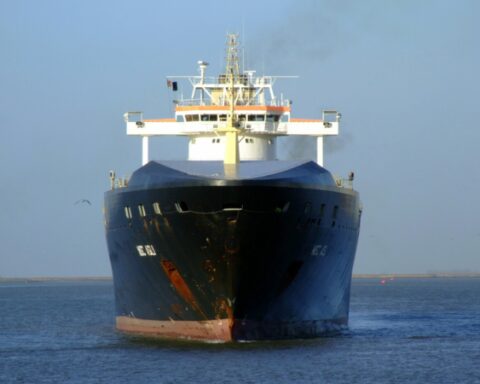

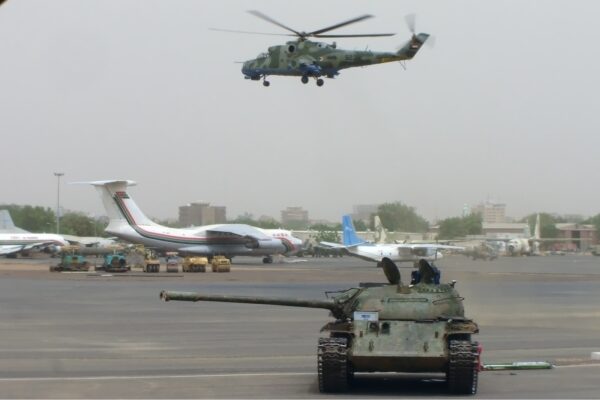
Sudan’s military government has now reportedly offered Russia what would be its first naval base in Africa — a long-sought prize that would give Moscow a strategic foothold along one of the world’s most vital shipping lanes.
Sudanese officials say the proposed deal would grant Russia access to the Red Sea for 25 years, allowing it to station up to 300 personnel and dock as many as four warships, including nuclear-powered vessels. In return, the regime in Khartoum would receive advanced Russian air-defense systems and other weaponry at cut-rate prices for its ongoing civil war.
For Moscow, which has struggled to expand its military presence across Africa, the offer represents a major strategic breakthrough. For the United States, however, it’s a troubling development that could undermine years of efforts to keep Russia and China from extending military influence over African ports crucial to global trade. A Russian base at Port Sudan — or another Red Sea site — would give Vladimir Putin a powerful vantage point overlooking the Suez Canal, through which roughly 12 percent of global commerce flows.
Sudanese officials told The Wall Street Journal they are desperate for new weapons, even as they acknowledge that partnering with Russia could spark backlash from Washington and European nations. Khartoum has so far declined comment publicly, as has Russia’s government.
U.S. officials say the possibility of a Russian base on the Red Sea would significantly enhance Moscow’s naval reach. A senior American official warned that such a base — either in Libya or Sudan — would allow Russian warships to operate in the Mediterranean and Indian Ocean with far fewer constraints. Retired Air Force Maj. Gen. Mark Hicks, who oversaw U.S. special operations forces in Africa, said a deal in Sudan would give Moscow far more prestige and leverage globally. “Definitely good for Putin,” he added.
Russia has been pursuing Port Sudan access for years, but internal Sudanese politics repeatedly delayed negotiations. The country’s civil war — which erupted in 2023 between Gen. Abdel Fattah al-Burhan and his former deputy, Lt. Gen. Muhammad Hamdan Dagalo — has created an opening for Moscow. As alliances shift, Sudan’s ruling generals appear more willing than ever to bargain with foreign powers to shore up their position.
Sudan originally leaned toward Dagalo’s Rapid Support Forces, whose access to gold mines attracted Russian interests. But when rebel gains faltered the Kremlin pivoted to backing the Sudanese military. Tehran, Cairo, and Ankara have supplied drones to the regime, while the U.S. and U.N. have accused the UAE of aiding the rebels, allegations Emirati officials deny.
The conflict has produced immense human suffering. Rights groups say Rapid Support Forces fighters have re-created the horrors of the early-2000s Darfur genocide, slaughtering civilians as they seized the entire region in October. Diplomats estimate that as many as 150,000 people have died from violence, starvation, and disease, with 12 million driven from their homes.
China — already entrenched in Africa’s ports — established its first overseas naval base in Djibouti in 2017, just six miles from America’s largest African outpost. With Russia now pushing for its own Red Sea access, U.S. officials worry that the world’s top adversaries are tightening their grip on a region critical to energy security, counterterrorism operations, and global trade.
The Sudanese regime’s eagerness to cut a deal with Moscow signals how precarious its battlefield position has become. For the United States, the potential arrival of a Russian naval base on the Red Sea marks a serious new challenge in an increasingly contested geopolitical landscape.
[READ MORE: Explosions Hit Russian-Linked ‘Shadow Fleet’ Tankers Near Turkey, Raising New Questions About Black Sea Security]