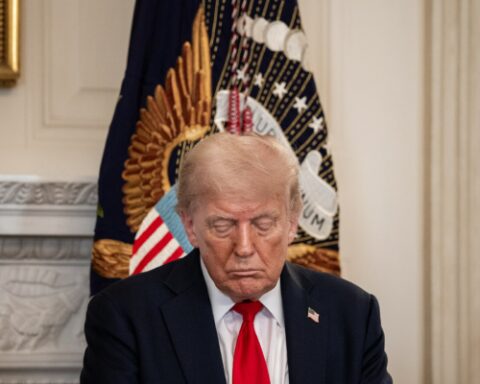

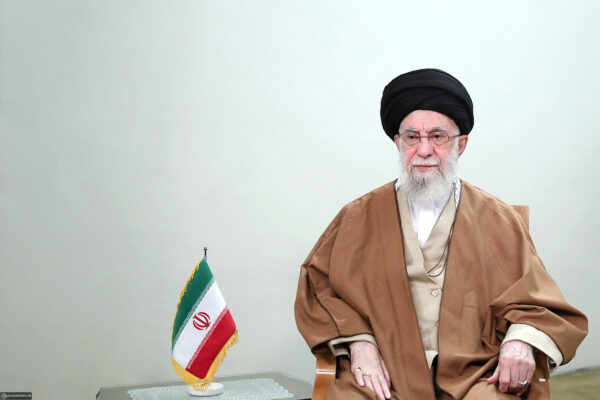
Iran’s supreme leader is now reportedly confronting what could be the most consequential decision of his more than three decades in power: accept a deal with President Donald Trump to sharply limit Tehran’s nuclear ambitions, or risk a direct and potentially devastating conflict with the United States and Israel.
At 86 years old, Ayatollah Ali Khamenei finds himself increasingly isolated. Diplomats and regional officials suggest that his long-standing strategy of waiting out successive American presidents may no longer apply — particularly with Trump back in office.
“As I told them, experience could be used to wait, could be useful, and at the same time very toxic,” a senior regional source said, describing advice given to the Iranian regime. The warning underscores concerns that Khamenei may miscalculate by assuming Trump will tolerate prolonged delays or evasions.
Unlike previous administrations, Trump’s negotiating team does not resemble a traditional diplomatic corps. His top envoys include real estate developer Steve Witkoff and son-in-law Jared Kushner — businessmen known for pursuing transactions with major financial implications. The shift in approach reflects a White House that views negotiations less as drawn-out diplomatic exercises and more as high-stakes deals with clear bottom lines.
Witkoff said in a Fox News interview that Trump is “curious” why Iran has not yet “capitulated” to U.S. demands. Talks are expected to resume Thursday in Geneva, with the U.S. characterizing the meeting as a last opportunity for a significant breakthrough. Absent progress, Trump has indicated he is prepared to follow through on threats of military action.
Yet the risks are considerable. A senior regional source warned U.S. officials that Iran would likely walk away from negotiations if attacked. Joint Chiefs of Staff Chairman Gen. Dan Caine has reportedly cautioned the president that a military campaign could carry significant dangers, potentially entangling the U.S. in a prolonged conflict.
Publicly, Khamenei has shown little willingness to bend. Tehran rejects demands to abandon uranium enrichment, curb its ballistic missile stockpile, or withdraw support from proxy groups. “Enrichment is our right,” Iranian Foreign Minister Abbas Araghchi declared on CBS’s Face the Nation, adding that discussions are limited strictly to nuclear issues.
While joint U.S. and Israeli strikes in June did not eliminate Iran’s nuclear program, they reportedly halted its enrichment activities — stripping Tehran of a key source of leverage in past negotiations. Naysan Rafati of the International Crisis Group noted that, for the first time in decades of diplomacy, the U.S. is seeking to maintain the status quo rather than roll back an active expansion.
A central concern remains Iran’s stockpile of roughly 400 kilograms of uranium enriched to 60 percent purity. International Atomic Energy Agency chief Rafael Grossi said that quantity could theoretically produce 10 nuclear bombs. Witkoff recently stated that Iran is “probably a week away” from obtaining industrial-grade bomb-making material.
One unnamed Iranian official told Reuters that Tehran might consider sending half of its most highly enriched uranium abroad, diluting the rest, and participating in a regional enrichment consortium subject to international oversight. Another possible compromise could limit enrichment strictly to medical purposes.
Still, Iran’s ballistic missile program and support for proxy groups — priorities for Israel — are widely viewed in Tehran as non-negotiable. Rafati described missiles as one of Iran’s few remaining deterrents.
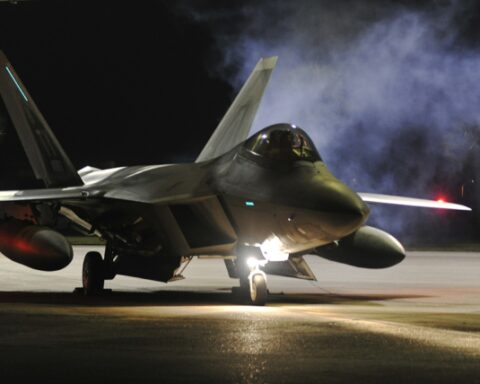
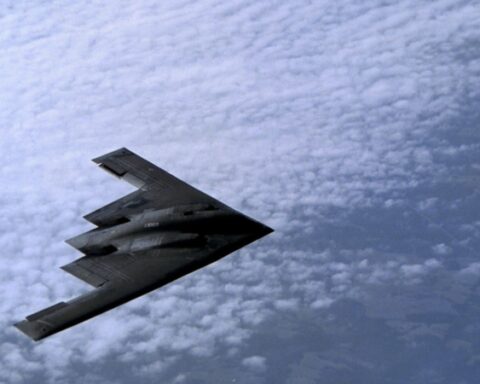
All of this unfolds against the backdrop of what is described as the largest U.S. airpower buildup in the region since 2003. Reports suggest potential strikes could be coordinated with Israel and might even target Khamenei personally.
Despite suffering weakened air defenses, economic crisis, sanctions, and domestic unrest, Iran’s leadership may see capitulation as the greater threat. Hard-liners argue that limited responses to past U.S. and Israeli actions only emboldened adversaries.
Khamenei recently posted defiant messages on X, rejecting American pressure and insisting the Islamic Republic cannot be eliminated. According to The New York Times, he has even arranged a succession plan in the event of assassination.
Whether Tehran chooses confrontation or compromise, the stakes for the region — and beyond — could not be higher.
[READ MORE: McCarthy Slams Trump’s Supreme Court Attacks as Tariff Ruling Sparks Conservative Rift]