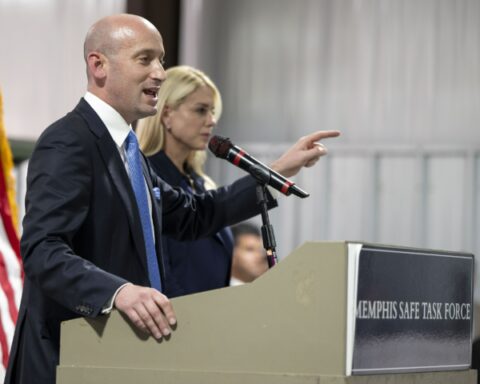


White House Deputy Chief of Staff Stephen Miller told Fox News host Jesse Watters on Thursday that U.S. military operations in Iran have dealt devastating blows to the country’s military power, describing the campaign as a historic and overwhelming success even as fighting in the region continues.
Appearing on Jesse Watters Primetime, Miller defended President Donald Trump’s military strategy and praised the progress of Operation Epic Fury, the U.S. campaign targeting Iranian forces and leadership.
“I think it’s important for your viewers, Jesse, and the American people to know that there’s never, in history, been a more total asymmetric, one-sided annihilation of the enemy than you are witnessing and is unfolding right now in Iran,” Miller said during the interview.
The senior Trump adviser argued that the strikes have effectively eliminated Iran’s ability to carry out military aggression, saying the country’s core capabilities have been destroyed by the U.S.-led operation.
According to Miller, Iran’s long-feared military strength has been dismantled in a matter of weeks.
“Iran has long been feared by all the nations of the Middle East. It’s long been believed to be one of the great military powers of the region, and yet the United States, under President Trump’s leadership, has annihilated their Navy, has annihilated their missile capabilities, has dealt devastating strikes to the IRGC and their command structure, has taken out, in collaboration and coordination with Israel, their nation’s sinister leadership and command structure,” Miller told Watters.
“It has been a complete wipeout of their capacity to unleash violence on the world,” he added.
The remarks reflect the administration’s effort to portray the operation as decisive and successful. But the broader conflict remains volatile, with Iran continuing to respond with strikes of its own.
Just one day before Miller’s appearance, Iran targeted at least two oil tankers in the Strait of Hormuz, the narrow waterway that serves as one of the most critical oil shipping routes in the world. The strait has effectively been closed as Iran has blocked ships from passing through, sending energy markets into turmoil and driving oil prices sharply higher.
Iran has also launched more than 10 missiles at Israel since the war began, including the use of indiscriminate cluster munitions, highlighting the ongoing danger even as U.S. officials emphasize the scale of the damage inflicted on Tehran’s military apparatus.
Despite the intense military campaign, American intelligence agencies believe Iran’s government remains firmly in control of the country, according to officials cited by Reuters on Thursday. The reports suggest that while the strikes have been severe, the leadership structure inside Iran has not collapsed.
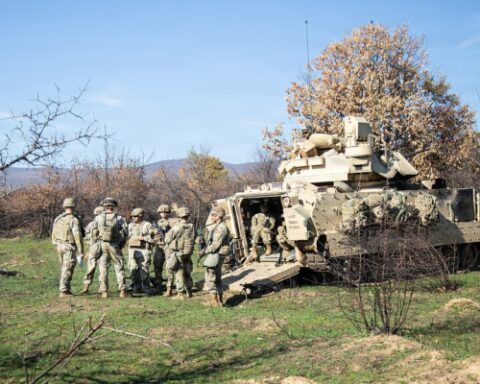
Meanwhile, the conflict has already come with a cost for American troops. Earlier this month, Iran carried out a deadly drone strike targeting U.S. service members. According to reporting by CBS, the attack killed seven American soldiers and hospitalized 30 others.
The incident underscores the harsh realities that often accompany military escalation. While administration officials point to battlefield successes and weakened adversaries, the conflict continues to carry consequences for the region, the global economy, and the service members sent into harm’s way.
As Operation Epic Fury moves forward, the administration’s message remains focused on strength and decisive action. At the same time, the ongoing exchanges of fire and rising instability around critical global shipping routes illustrate how even overwhelming force rarely brings an immediate end to the dangers that come with war.