
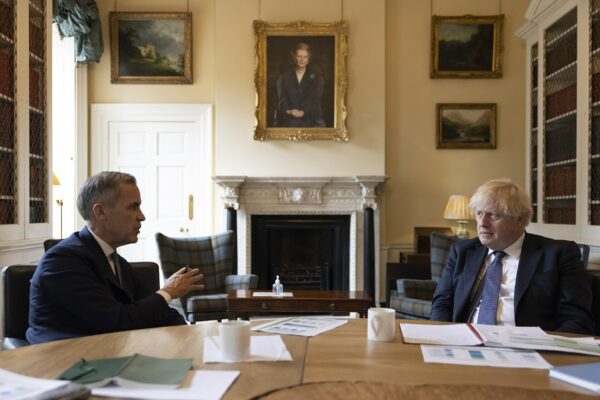
Canadian Prime Minister Mark Carney walked away from high-stakes trade negotiations with the United States on Friday night, setting the stage for a new tariff battle with President Donald Trump’s administration.
With less than an hour remaining before a midnight deadline for a new round of U.S. tariffs, Carney instructed Canadian negotiators to leave the talks. He then announced that Canada would respond “dollar for dollar” once 50% tariffs took effect on $20 billion worth of Canadian goods.
Carney said Canada entered negotiations in good faith and sought “the best deal for Canadians,” but would accept “never a deal at any price or on any deadline.”
The decision separates Canada from other major U.S. trading partners, including Britain and the European Union, which have reached agreements with the Trump administration involving tariffs.
The breakdown came just days after Trump said Tuesday that a deal was practically finished. Carney never made the same declaration, maintaining throughout the week that negotiations still required more work as officials held lengthy meetings in Washington.
Both countries are now accusing the other side of introducing new or unreasonable demands during the final stages of negotiations.
Carney’s decision carries substantial economic risks. Canada is deeply integrated economically with the United States, depends heavily on trade with its southern neighbor and relies on America for defense. Carney acknowledged Canadians would face consequences from the tariffs and pledged government support for affected companies and industries.
The dispute could also prove costly for Americans, who have faced higher prices connected to Trump’s tariff policies, along with increases driven by the Iran war and rising oil costs.
Friday’s confrontation is hardly Carney’s first clash with Trump.
During a January speech in Davos, Switzerland, Carney argued the world had entered a new era in which the United States could no longer be considered a guarantor of stability. He said middle powers such as Canada needed to unite to survive. The remarks and their international reception angered Trump.
Trump has also objected to Carney’s outreach to China, which produced a limited trade agreement this year, along with Canadian provinces continuing bans on U.S. liquor sales and Canada imposing retaliatory measures against American tariffs.
Since becoming Canada’s leader last year, Carney has sought to reduce the country’s economic dependence on the United States by developing new relationships across Europe and Asia.
Trump, meanwhile, has previously said he was willing to inflict “economic pain” on Canada and has repeatedly discussed making the country the 51st state.
Carney’s stance has received support from several Canadian provincial leaders. Ontario Premier Doug Ford backed the prime minister, while British Columbia Premier David Eby vowed to continue fighting.
Alberta Premier Danielle Smith took a more cautious position, urging Carney to return to negotiations.
Despite the economic uncertainty, Carney showed no indication Friday that he was prepared to back down.
“We will not allow any nation to determine our future,” he declared.