
Global shipping giant A.P. Moller-Maersk is reporting increased demand from India as expectations grow that New Delhi may soon reach a long-awaited tariff agreement with the United States. The shift comes as Washington’s 50% tariffs on Indian goods continue to exert pressure—duties imposed after President Donald Trump criticized India’s reliance on Russian oil. But with India’s energy sourcing now changing, momentum appears to be building for a breakthrough.
Trump signaled last month that the U.S. may be ready to ease the tariffs, noting that India has significantly curtailed its purchases of Russian crude. “They’ve stopped doing the Russian oil. It’s been reduced very substantially,” Trump told reporters during a November press conference in the Oval Office. His comments suggested a clear softening of the administration’s stance and gave global markets reason to anticipate a potential recalibration of trade policy.
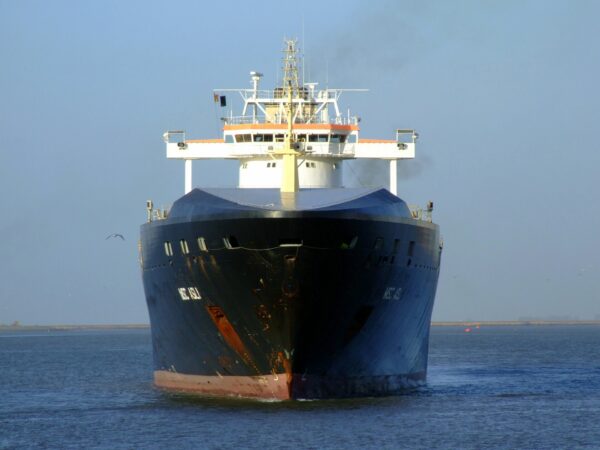
On Wednesday, Maersk highlighted the rising demand in a customer advisory, saying its MECL service—the major shipping link connecting India with the Middle East, North Africa, and North America—is running consistent weekly departures. The company added that demand could rise even further if the U.S. and India secure a formal trade agreement. For a company whose operations mirror shifts in global commerce, the signals from India point toward deeper economic integration with the United States.
Economists have also taken note. Deepali Bhargava of ING said India has been rapidly diversifying its crude suppliers, meaningfully reducing imports from Russia while increasing purchases from the United States. That shift, she suggested, reflects a strategic repositioning as India looks to stabilize trade relations and strengthen its currency. “We see a high probability of an India-U.S. trade deal emerging in 2026, which could strengthen the rupee and support foreign institutional investor inflows amid strong growth and supply chain resilience,” Bhargava said.
The underlying message: India understands that economic alignment with the United States offers long-term advantages, especially as global supply chains continue to reorient and countries reassess their geopolitical dependencies. The drop in Russian oil imports gives Trump’s administration political cover to pursue a more cooperative trade framework without appearing to reward behavior it had previously condemned.
Maersk, meanwhile, emphasized it is closely monitoring geopolitical developments around the Red Sea and Suez Canal following the announced Gaza ceasefire. While many shippers are seeking clarity on the route’s safety, the company said it currently has no specific timeline for resuming transit through the Red Sea. That uncertainty continues to ripple through global logistics, underscoring how dependent international commerce remains on regional stability.
Activity on the U.S. West Coast is also increasing, Maersk noted, driven in part by the current tariff environment. But the surge comes with complications. Stricter enforcement of English-language proficiency requirements and updated commercial driver’s license standards have tightened driver availability for local logistics networks—an issue that could create bottlenecks for the short-distance transport of containers.
Together, these developments show how trade policy, geopolitics, and logistics realities intersect in real time. With India signaling economic flexibility and the U.S. hinting at lower tariffs, a renewed partnership appears increasingly possible—one that could reshape supply chains and future global commerce.
[READ MORE: Pentagon Deploys U.S.-Made “Kamikaze” Drone Modeled After Iranian Weapon as Hegseth Pushes Rapid Drone Expansion]