

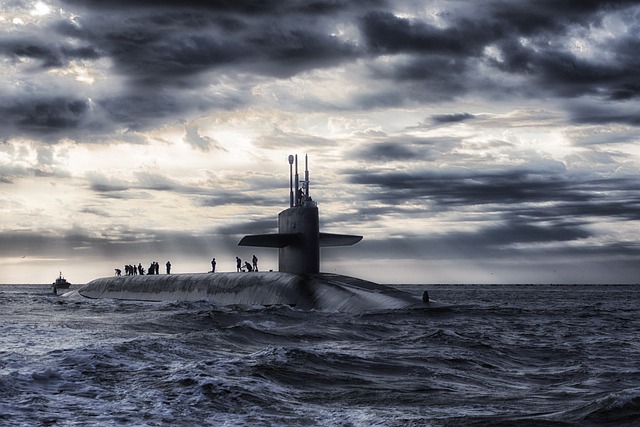
A former top British naval officer is now reportedly issuing a stark warning about the state of the United Kingdom’s nuclear submarine program, declaring bluntly that the country is “no longer capable” of managing it. Retired Rear Adm. Philip Mathias, once the Ministry of Defence’s director of nuclear policy, said the failures within the program have reached crisis levels and threaten Britain’s ability to defend its national interests. His assessment, reported by The Telegraph, paints a troubling picture of a declining military capability at a time when global threats are rising.
Mathias did not mince words. “The U.K. is no longer capable of managing a nuclear submarine programme,” he said, adding that performance across the board “continues to get worse in every dimension.” He described the situation as “unprecedented” in the nuclear submarine age and blamed it on a “catastrophic failure of succession and leadership planning.”
One of the most severe consequences, Mathias said, is the impact on patrol crews. During the Cold War, submariners typically spent about 70 days at sea per patrol. Now, he said, that number has soared to more than 200 days because the U.K. does not have enough operational submarines. The shortage, he argued, leaves the country struggling to counter an increasingly aggressive Russia in the North Atlantic.
Calling the “shockingly low availability” of British submarines a direct result of years of production delays, Mathias urged the U.K. to pull out of the multibillion-dollar AUKUS defense pact with the United States and Australia. Under that agreement, the three allied nations plan to build 12 new nuclear submarines, but Mathias said the program is not on track to deliver the capability or the timeline Britain needs.
He pointed to a series of cascading failures: the Dreadnought program running late, the Astute-class submarine deliveries falling further behind schedule, and a growing maintenance and refit backlog for the Astute boats. The SSN-AUKUS design, he said, will not meet the operational demands facing either Britain or Australia.
The Telegraph reported that many of the U.K.’s existing submarines are stuck in port with long-term problems. The Royal Navy has six Astute-class vessels, but analysts say boats like the HMS Ambush have now spent more than three years docked. Meanwhile, at least one of the four Vanguard stealth submarines is always deployed at sea, carrying 16 Trident 2 D5 ballistic missiles—each one a 60-ton weapon capable of mass destruction.
But even the nuclear deterrent has not been immune from trouble. The Telegraph noted launch test failures, including a missile that veered off course and self-destructed in 2016 and another misfire in 2024.
Mathias raised his concerns as Russia steps up activity near British waters, with Defence Secretary John Healey reporting an increase of more than 30 percent. Against that backdrop, Mathias’ warning suggests the U.K.’s undersea defenses may be slipping at the very moment adversaries are probing for weaknesses.