
A bipartisan pair of lawmakers is preparing to force what could become a razor-thin vote in the House over whether President Trump must receive explicit congressional authorization before launching military strikes against Iran.
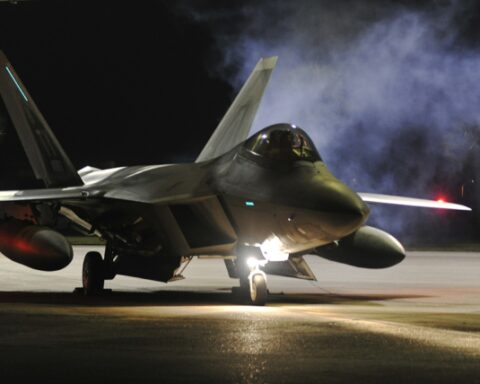
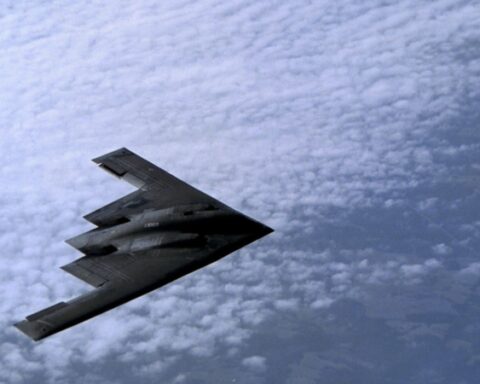
Reps. Ro Khanna, D-Calif., and Thomas Massie, R-Ky., say they plan to move next week to compel a floor vote on a War Powers Resolution that would require Congress to sign off before U.S. armed forces are used against the Islamic Republic. The effort comes as the United States has positioned warships and other military assets near Iran while simultaneously engaging in talks aimed at limiting Tehran’s nuclear program.
“Trump officials say there’s a 90% chance of strikes on Iran. He can’t without Congress,” Khanna wrote Wednesday on X. He said he and Massie would make a motion to discharge their resolution to force debate and a vote, arguing that lawmakers should weigh in before American troops are put “in harm’s way.”
In the closely divided House, the margin for error is virtually nonexistent. Republicans can afford no more than one GOP defection on a party-line vote, assuming full attendance. Any absences could shift the outcome dramatically, setting the stage for a high-stakes confrontation over war powers and executive authority.
The resolution at the center of the fight, H. Con. Res. 38, was first introduced in June 2025 during the 12-day war between Israel and Iran, before the U.S. struck Iran’s nuclear sites. It currently has 76 Democratic co-sponsors and no additional Republican co-sponsors beyond Massie.
The measure directs the president to “terminate the use of United States Armed Forces from hostilities against the Islamic Republic of Iran or any part of its government or military” unless Congress provides a declaration of war or specific authorization for the use of military force. It also makes clear that it would not restrict the United States from defending itself or interfere with intelligence gathering and sharing.
Massie echoed the constitutional argument in his own statement on X, saying, “Congress must vote on war according to our Constitution.” He added that he would vote to “put America first,” which he said means opposing further war in the Middle East.
The push comes as President Trump last week stated that regime change in Iran “would be the best thing that could happen,” underscoring the stakes of the debate. With American forces building up in the region, questions over how far the executive branch can go without congressional approval have once again moved to the forefront.
War powers resolutions are considered privileged parliamentary procedures in both chambers, allowing lawmakers to bypass House Republican leadership and force votes on military engagement. Still, previous attempts by Democrats to use this mechanism have failed.
Just last month, the House narrowly rejected a similar resolution aimed at limiting Trump’s authority to use military force in Venezuela. In a 215-215 vote, Republicans blocked the measure. Two Republicans — Massie and Rep. Don Bacon of Nebraska — joined all 213 Democrats in support.
Khanna framed the upcoming vote in historic terms, comparing it to congressional decisions preceding the Iraq war. “Like the votes before the Iraq war, this could be one of the most consequential votes in the history of Congress,” he said, questioning whether lawmakers would halt what he called another potential “endless dumb foreign war.”
As the House prepares for what could be a defining moment, the debate over constitutional authority, America’s role abroad, and the risks of deeper Middle East involvement is once again front and center.