

President Donald Trump on Wednesday forcefully rejected a reported proposal involving Oman and Iran jointly charging tolls on ships traveling through the Strait of Hormuz, warning there would be severe consequences if the longtime U.S. partner moved forward with the discussions.
Speaking during a White House Cabinet meeting, Trump made clear he would not tolerate any arrangement giving Tehran influence over one of the world’s most critical shipping lanes.
“Oman will behave just like everybody else or we’ll have to blow them up,” Trump told reporters. “They understand that. They’ll be fine.”
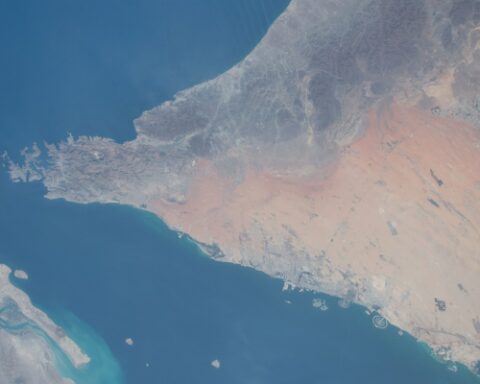
The remarks came as negotiations continue over ending the three-month U.S. war against Iran, a conflict that has already rattled global markets and intensified fears about the long-term costs of instability in the Middle East. At the center of the talks is the Strait of Hormuz, the narrow but vital waterway through which roughly 20 percent of the world’s oil supply passes.
Iran effectively shut down the strait shortly after the U.S. and Israel launched attacks against the country in February. Although Trump later announced a ceasefire in April, it was contingent on Iran fully reopening the shipping route. Despite that agreement, transit through the strait has remained severely restricted.
The disruption has already sent global gas prices higher and fueled growing concerns about the broader economic fallout from continued conflict in the region. Last week, the United Nations’ Food and Agriculture Organization warned that the near-total collapse of shipping traffic through the strait could contribute to a worldwide food crisis if conditions persist.
Oman has played a delicate role throughout the conflict. The Gulf nation has long maintained positive ties with Washington while also serving as a key intermediary in communications with Tehran. Oman has reportedly helped facilitate behind-the-scenes negotiations involving Iran’s nuclear program and more recently efforts aimed at ending the war between the Islamic Republic and the United States.
Still, Trump signaled Wednesday that there would be no compromise when it comes to control of the waterway.
“The strait’s gotta be open to everybody,” the president said. “It’s international waters. Nobody’s going to control it. We’re going to watch over it. We’ll watch over it, but nobody’s going to control it. That’s part of the negotiation that we have.”
The administration later reinforced Trump’s position through a State Department social media post issued after the Cabinet meeting.
According to Bloomberg News, Iranian and Omani officials have discussed a proposal that would allow the two countries to jointly impose tolls on vessels traveling through the strait. The report added another layer of uncertainty to already tense negotiations over regional security and global commerce.
A spokesperson for the Omani Embassy in Washington was not immediately available for comment. Someone answering the embassy’s main phone line said the office was closed for Eid.
As the war drags on and economic pressure spreads far beyond the Middle East, the Strait of Hormuz has increasingly become more than just a military flashpoint. It now stands at the center of a high-stakes struggle involving energy markets, international trade, and the broader question of how much instability the world can absorb before the consequences reach every household.