
Nvidia CEO Jensen Huang was pressing President Trump to loosen restrictions on chip sales to China during the same period he was romantically involved with a woman U.S. intelligence officials believe is a Chinese spy, according to a new report.
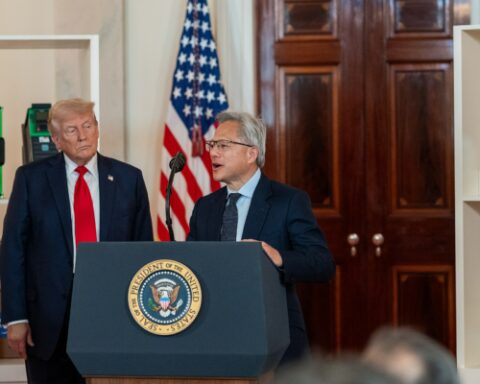
The New York Post identified several instances in which Huang lobbied the president while he was reportedly caught up in the so-called honeytrap. The 63-year-old attended a $1 million-per-person dinner at Mar-a-Lago in April 2025, where he pushed to lift chip restrictions that had just been imposed. The Post found at least three documented meetings between Trump and Huang after which the administration made policy changes that eased Nvidia’s ability to sell advanced chips to China.
The scandal broke when the New York Times reported, citing anonymous sources briefed on intelligence surveillance, that Huang had a relationship with a woman known as Alice Huang, who is linked to Singapore-based cloud company Megaspeed. The Times reported she remains under surveillance and is accused of helping China evade constraints on access to advanced artificial intelligence chips. Trump was briefed on the intelligence last year and continued to host Huang at events.
Nvidia initially pushed back, saying an investigation last year found nothing suggesting corporate espionage that would undermine U.S. national security. Huang first denied wrongdoing but admitted to the affair on Sunday in a statement released by the company.
“I was unfaithful to my wife,” Huang said, adding that his actions hurt his wife, Lori, and their children and that he was deeply sorry. The couple has been married for 41 years.
Trump told reporters he spoke with Huang to check on him and asked directly whether he knew the woman was a spy. According to Trump, Huang said he had no idea. Trump said he believes him.
Anonymous intelligence sources told the Times that Huang had not received security briefings that would have warned him about the woman’s suspected ties to Chinese espionage.
Lawmakers want answers. House committee leaders sent Huang a letter requesting he appear at a closed-door briefing on Nov. 18 to discuss his interactions with the alleged agent and Nvidia’s security protocols against foreign espionage. The letter was sent before Huang admitted to the affair.
China’s Ministry of Foreign Affairs dismissed the allegations as smears.
Huang has been one of the most powerful advocates for loosening controls on China’s access to Nvidia chips, and his close relationship with Trump has made him a central figure in the administration’s approach to the artificial intelligence race with Beijing.