
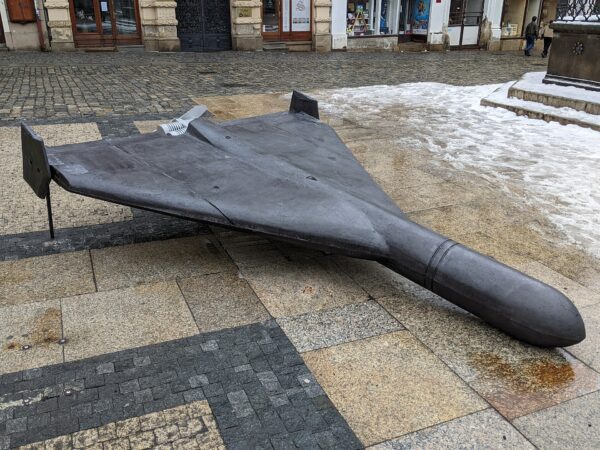
Iran launched a six-drone attack on a U.S. airbase in Bahrain early Sunday, its second strike on the Gulf kingdom in three days. The attack ended a two-month lull in Iranian strikes on Gulf states and is testing fragile peace talks.
Iran’s Islamic Revolutionary Guard Corps (IRGC) said it targeted a U.S. air defense radar at al-Riffa air base. A statement carried by Iran’s state broadcaster said the radar was “targeted by six drones belonging to the IRGC Aerospace Force.” Tehran framed the attack as retaliation for what it called “hostile U.S. actions.”
The U.S. military pushed back on Iran’s account. It said it intercepted two Iranian attack drones headed toward Bahrain on Sunday and denied that the radar had been hit. Bahrain’s military said its air defenses intercepted and destroyed the drones “before they could achieve their objectives.”
On Friday, Iran claimed it had struck a U.S. early-warning radar facility in Bahrain. The U.S. military denied that claim too, saying the drones were intercepted without causing damage. Before Friday, Iran had not hit the kingdom since a blitz in September.
Bahrain’s foreign ministry condemned what it called “continued brutal Iranian attacks on its territory” and said it holds Iran “fully responsible for their consequences.” The U.S. Embassy in Bahrain urged Americans to exercise “heightened vigilance” and warned of possible flight cancellations, airspace closures and other travel disruptions.
The strikes target one of America’s most important military footholds in the Middle East. Al-Riffa hosts a key U.S. early-warning air defense radar site and supports American helicopter operations. Bahrain is also home to Naval Support Activity Bahrain, headquarters of U.S. Naval Forces Central Command and the Navy’s Fifth Fleet.
The escalation comes as negotiators try to end the roughly eight-month conflict and reopen the Strait of Hormuz, a vital route for global oil. Traffic through the strait is down about 65%. The U.S. Navy is blockading Iranian ports, while Iran enforces its own permit rules on shipping.
President Trump has recently said he might hold off on attacking Iran if the U.S. faces no new provocations from Tehran or the Houthis in Yemen, though he would keep the naval blockade in place. His administration has so far rejected Iran’s demands to ease economic sanctions.
Iranian Foreign Minister Abbas Araghchi said a 10-nation regional bloc backs Iran’s plan to reopen the strait within two days if the U.S. agrees to a ceasefire and meets seven conditions.
Tensions are running high elsewhere as well. On Monday, Iran’s state broadcaster, citing the Iranian Navy, said a tanker east of the Strait of Hormuz caught fire after hitting a naval mine in what Tehran called a “restricted area.”
Last week, officials moved Treasury Secretary Scott Bessent from his Washington home to a military base over alleged Iranian threats to his life. Secretary of State Marco Rubio and Defense Secretary Pete Hegseth also live in base housing.