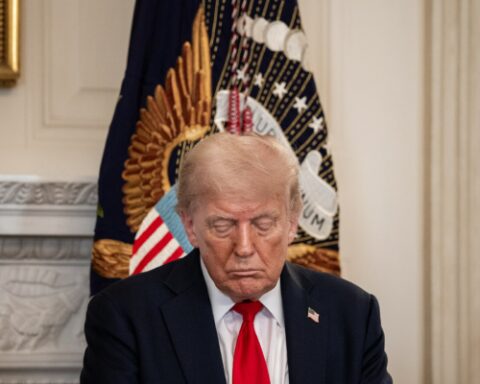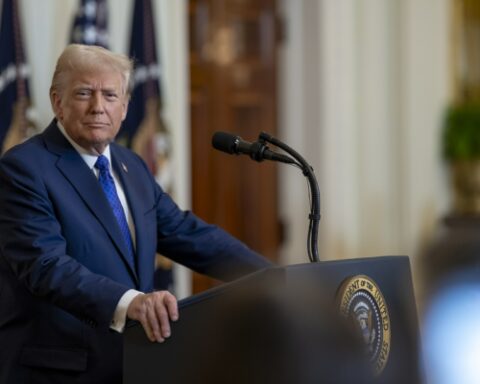

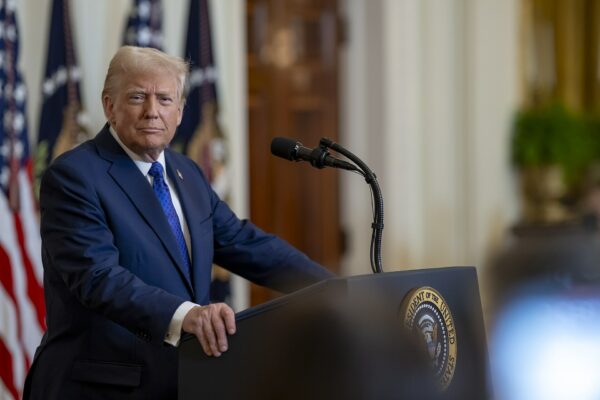
President Donald Trump announced Friday that he was heading to the White House Situation Room to make what he described as a final determination on a potential peace agreement with Iran, fueling speculation that a significant development in U.S.-Iran relations could be on the horizon.
In a post on Truth Social, Trump revealed that discussions had progressed to the point where he was prepared to weigh the final terms of a proposed deal.
“I will be meeting now, in the Situation Room, to make a final determination,” Trump wrote.
The president’s statement immediately drew attention because of its implications for one of the world’s most persistent geopolitical flashpoints. Relations between Washington and Tehran have long been marked by confrontation, military tensions, and disputes over Iran’s nuclear ambitions. Any movement toward a formal peace arrangement would represent a notable moment after years of instability and conflict.
Trump used the announcement to reiterate several conditions that he said must be met before the United States would sign such an agreement.
At the top of the list was Iran’s nuclear program.
“Iran must agree that they will never have a Nuclear Weapon or Bomb,” Trump wrote.
The president also outlined provisions related to the Strait of Hormuz, a strategically important shipping route that has frequently been at the center of regional tensions. Trump stated that the waterway must be immediately reopened to unrestricted shipping traffic and that no tolls could be imposed on vessels traveling through it.
In addition, he said any remaining water mines in the area would have to be removed or destroyed.
Trump claimed that numerous mines had already been eliminated through U.S. operations and asserted that Iran would complete the removal or detonation of those that remain.
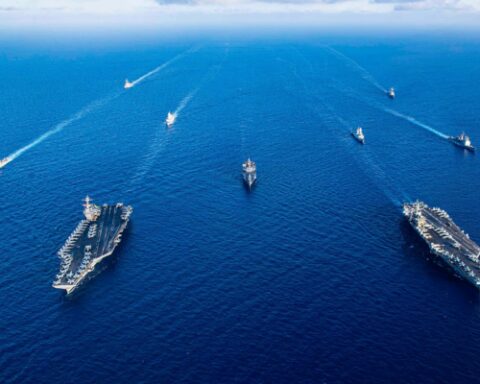
The president further stated that ships that had been delayed in the strait due to what he described as an “amazing and unprecedented Naval Blockade” would be permitted to begin returning home.
In a characteristic flourish, Trump addressed the crews directly, telling them to “say HELLO” to their families from “your favorite President.”
Another major component of the proposed arrangement involves enriched nuclear material that Trump said remains buried underground beneath terrain affected by a U.S. B-2 bomber strike conducted 11 months ago.
According to Trump, the United States would work alongside Iran and the International Atomic Energy Agency to recover and destroy the material. He asserted that only the United States and China possess the mechanical capabilities necessary to carry out such an operation.
The proposal would place responsibility for disposing of the material in the hands of international actors rather than leaving it buried beneath damaged infrastructure and collapsed terrain.
Trump also emphasized that financial considerations remain unresolved.
“No money will be exchanged, until further notice,” he wrote.
Beyond those core provisions, the president indicated that negotiators had already reached agreement on several additional matters, though he characterized them as less significant than the issues involving nuclear weapons, maritime security, and the removal of enriched material.
“Other items, of far less importance, have been agreed to,” Trump said.
The announcement comes as the administration weighs whether diplomacy can secure the objectives it has publicly outlined. While the president’s message focused on military actions that preceded the current negotiations, the proposed agreement itself centers on preventing future escalation and addressing long-standing security concerns through negotiated terms.
Whether the deal ultimately moves forward remains uncertain. Trump made clear that the final decision rests ahead of his Situation Room meeting, where he said he would determine whether the proposed framework satisfies U.S. requirements and warrants formal approval.
[READ MORE: Centcom Accuses Iran Of Violating Fragile Ceasefire With Missile Launch Toward Kuwait]