
President Donald Trump has directed the military to prepare additional strikes against Iran that could begin as soon as this weekend, according to a source familiar with military planning, as the administration weighs several options for expanding its campaign against Tehran.
The Wall Street Journal first reported that Trump had approved plans for another round of military action, citing U.S. officials who said the strikes “would last a few days.”
According to CBS, one option under discussion would target Iran’s energy infrastructure. The report said senior officials have held high-level discussions about “cutting electricity across Tehran,” marking a possible shift in strategy after the United States had previously refrained from attacking Iranian energy facilities.
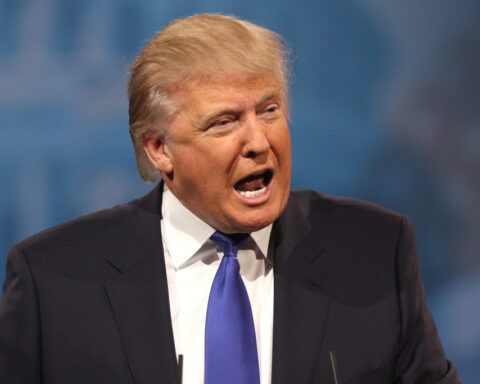
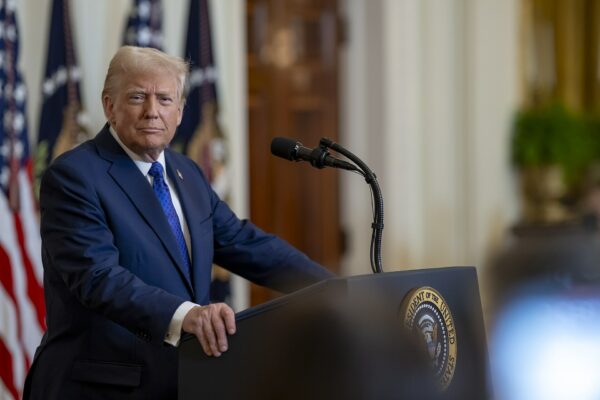
Speaking during a Cabinet meeting at Camp David on Friday, Trump suggested additional military action was imminent.
The president said Iran still retains some military capabilities, but added, “soon they won’t have some left.”
When asked whether the United States was preparing for a large-scale offensive, Trump responded, “We’re going big. We’ve already gone big.”
He later indicated that military operations could intensify before eventually winding down.
“It’d be foolish to say no; you always have to keep your guard up,” Trump said.
The president also criticized the Iranian government’s conduct during negotiations aimed at ending the conflict, describing the regime as “very dishonest” and “very dishonorable to deal with.”
As an example, Trump pointed to Wednesday’s missile attack targeting U.S. forces in Jordan, which occurred while diplomatic efforts were ongoing.
“I mean, I’m waiting for [Special Envoy] Steve [Witkoff] to call me — ‘How’s the negotiation going?’” Trump said. “And instead, I got a call from [Secretary of War] Pete [Hegseth] that they just shot five missiles at one of our bases in Jordan.”
While the Wall Street Journal reported that the current plans call for several days of strikes, U.S. Central Command has also prepared a broader military option.
According to two sources who spoke with The New York Post, CENTCOM has drafted a potential two-week bombing campaign that would significantly expand American military operations if Trump chooses to escalate the conflict.
A senior administration official told the Journal that Trump “is in an escalatory mood” but is still evaluating “the depth of that response.”
Iran has repeatedly launched missile attacks against U.S. forces and regional allies in recent weeks, according to the report.
Rather than conducting another limited series of retaliatory strikes, the larger proposal reportedly envisions 10 to 14 days of sustained attacks. Sources said such a campaign would eliminate the need to conserve the United States’ shrinking stockpile of defensive interceptor missiles.
The operation was reportedly developed by CENTCOM commander Adm. Brad Cooper and would represent the largest U.S. military effort since the April 8 ceasefire that ended the first phase of the war.
However, the expanded campaign is not the only option available to the president.
According to the Wall Street Journal, Chairman of the Joint Chiefs of Staff Gen. Dan Caine has urged greater caution, warning the White House that a prolonged bombing campaign could further deplete U.S. supplies of air-defense interceptors needed to protect American troops and allies worldwide.
The source familiar with military planning declined to specify which option Trump is expected to approve. However, the several-day strike plan reported by CBS, including possible attacks on energy infrastructure, could represent a middle ground between the competing military proposals.
Following Wednesday’s missile attack in Jordan, Trump told Fox News during a phone interview that the United States was “going to beat the f—ing sh—” out of Iran, adding, “We’ll be hitting them hard.”
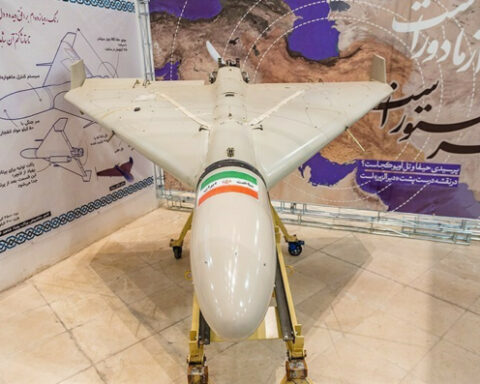
Later that day, U.S. forces carried out strikes against dozens of targets linked to Iran’s Islamic Revolutionary Guard Corps, including command centers as well as missile and drone facilities. The administration described the operation as a “powerful response” to Tehran.
[READ MORE: Pope Leo XIV Says His Mission as Pontiff Comes Before His American Identity]