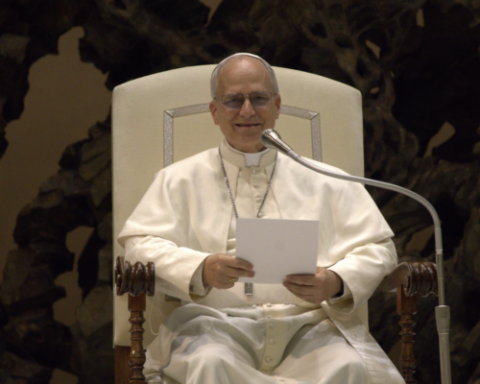

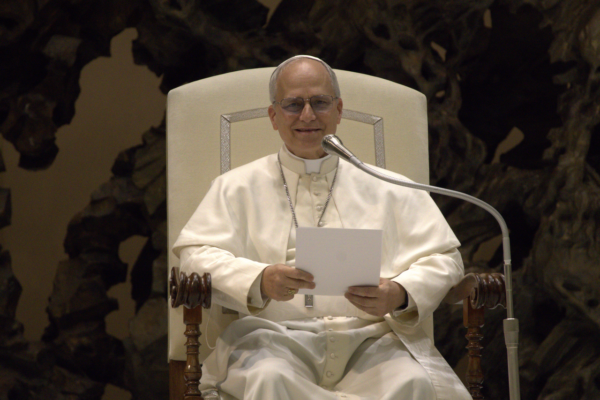
Pope Leo XIV reportedly emphasized that while he is proud of his American roots, he views his primary identity as the leader of the worldwide Catholic Church, gently pushing back after being asked how important being American is to him during an interview with NBC News.
The interview aired with NBC Nightly News anchor Tom Llamas from Castel Gandolfo, Italy, where the first U.S.-born pope reflected on his role as the head of the Catholic Church and discussed his connection to the United States.
Asked about the significance of being American, Pope Leo XIV said he believes his responsibilities as pontiff take precedence over his nationality, while making clear that he continues to hold a deep affection for the country where he was born.
“Well, first of all, just to clarify, I think of myself more as the Pope who happens to be American,” the pontiff said.
He explained that his comments were not intended to diminish the importance of his American heritage.
“Not to belittle what it means to be American,” he said. “I was born in the United States. My family is still in the United States. I have great love for America.”
At the same time, the pope said he understands his calling in broader terms, describing his mission as serving the global Catholic Church.
“But I understand my mission as having a very important dimension which is precisely being pastor of a universal church,” he said.
Although he emphasized the universal nature of his role, Pope Leo XIV also acknowledged the historic importance of becoming the first American-born pope.
“I will acknowledge that for myself as well as for the people of the United States, judging by the response that we’ve seen since May 8th of last year, that there is great significance in being the first American Pope,” he said.
Llamas later asked the pontiff what he loves most about the United States, giving Pope Leo XIV an opportunity to reflect on both the country’s values and his family’s history.
“So many things,” he replied before praising what he described as America’s “sense of freedom” and “sense of opportunity.”
The pope also pointed to his own family background as part of what shaped his perspective.
“I come from a family that my grandparents were immigrants on my mother’s side,” he said.
He added that his family’s history includes ancestors who were both slaves and slave owners, saying that experience has helped shape the way he understands the United States.
“We have people who were both slaves and slave owners. There’s a history of, if you will, growing up in the kind of experience that helps me to recognize myself one of the greatest wealths of the United States,” the pontiff said.
Toward the end of the interview, Llamas asked whether Americans could expect a papal visit to the United States in the near future.
Pope Leo XIV indicated that such a trip is possible, though no official plans have been finalized.
“They will see me there,” he said.
The pontiff explained that he and others had been reviewing the calendar for the coming years but noted that nothing has yet been confirmed.
“By coincidence, today we were looking at the calendar for the next couple of years,” he said. “Nothing is set in stone yet, but I certainly hope to be there soon.”
The interview offered a glimpse into how Pope Leo XIV views his historic role, balancing his identity as the first American-born pope with what he described as his greater responsibility to serve Catholics around the world while maintaining his enduring affection for the United States.