
Iran and Oman are reportedly nearing an agreement that could fully reopen the Strait of Hormuz to commercial shipping, according to a report, though key details of the proposed arrangement remain disputed.
The New York Times reported late Monday, citing Iranian and U.S. officials familiar with the negotiations, that the developing accord would require ships entering the strait from the Indian Ocean through the Gulf of Oman to travel along a route inside Iranian territorial waters.
Under the reported framework, vessels leaving the Persian Gulf would instead travel near Oman’s coastline along the southern side of the strategic waterway.
The report also said the proposal would have Iran and Oman collect a so-called “service fee” intended to cover environmental and security costs associated with commercial traffic through the strait.
Iran’s Foreign Ministry confirmed that discussions with Oman are ongoing regarding what it described as a “temporary” shipping route.
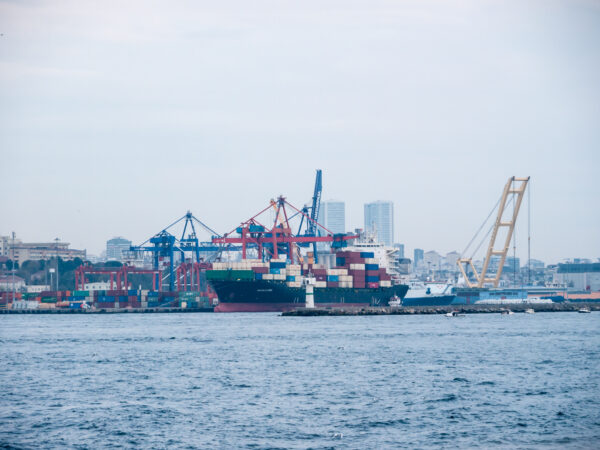
The Strait of Hormuz is one of the world’s most important maritime corridors, carrying roughly one-fifth of the world’s oil during peacetime.
Iranian official Ajorlu said Tehran believes the legal framework governing passage through the waterway should not revert to the system that existed before the recent conflict.
“We assert that the legal regime for passage through the Strait of Hormuz must not return to its pre-war state,” Ajorlu said, referring to the period when no single country controlled the waterway.
However, a U.S. official disputed Iran’s characterization of the proposed agreement.
According to The New York Times, the official said Iran’s description of the negotiations was “not accurate,” maintaining that no tolls would be collected under any agreement. The official also insisted Tehran would not have authority to determine which ships could transit the strait or dictate the routes vessels would use.
The differing accounts highlight continuing disagreements over what a final arrangement might include.
Last week, The Wall Street Journal reported that Iranian and Omani negotiators were working toward an agreement aimed at restoring commercial shipping through the strait.
According to that report, significant differences remained over transit fees and the rules governing vessel passage.
A U.S. official also told the newspaper that Washington has remained closely involved with the diplomatic effort through indirect engagement with mediators.
Meanwhile, Iranian officials have continued linking any long-term resolution to broader tensions involving the United States.
“As long as the US mischief continues, as long as the Iranian sea siege continues, as long as the US military aggression against Iran and its allies continues, there will be no [permanent] change in … Hormuz,” Iranian Foreign Ministry spokesman Esmail Baghaei said Monday.
Oman has continued to present itself as a neutral intermediary throughout the negotiations.
In a statement issued on July 14, Oman’s Foreign Ministry described its role as one of “transparent and neutral cooperation with all parties,” saying its objective is to restore freedom of navigation through the Strait of Hormuz while remaining consistent with international maritime law.
The current discussions build on earlier diplomatic efforts between the two countries.
In June, Iran and Oman established a joint working group focused on navigation, shipping services, and the future management of the Strait of Hormuz.
At the time, both governments pledged to work toward maintaining the strategically important waterway as “a secure and open” route for international shipping.
While negotiations appear to be progressing, officials from multiple countries continue to offer differing accounts of what a final agreement would entail, leaving several major issues unresolved as talks continue.