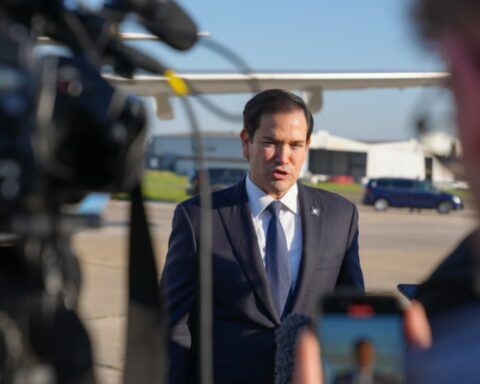

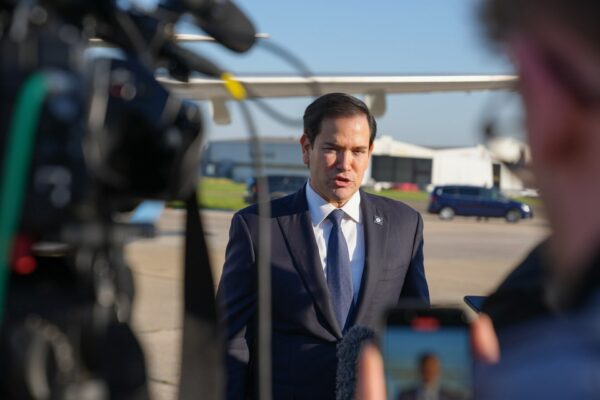
Secretary of State Marco Rubio announced Friday that the United States is imposing full blocking sanctions against the International Criminal Court (ICC). The move sharply escalates the administration’s fight against the global judicial body, which critics say is unjustly pursuing war crimes cases against Israel, American service members and the Trump administration.
In a video message, Rubio accused “globalist experts an ocean away” of wanting “more power, and they want it at the expense of our sovereignty as a nation.”
“We will ban transactions with this rogue court, cutting off their resources and crippling their ability to operate against us,” Rubio said. “Because our message is clear: the United States and the American people are not subject to the jurisdiction of this fake ICC.”
The sanctions likely block any American or U.S. business from working with the court. Transactions involving banking, technology transfers, commercial services and professional engagement become punishable. The U.S. can also seize any ICC property or interests in the country, as well as any ICC assets possessed or controlled by a U.S. person.
The Treasury Department is issuing a six-month general license so people and entities can wind down their dealings with the court. The 180-day license covers activity involving maintenance of operations, certain IT-related activities including cloud and software services, activity tied to the ICC pension plan and certain activity related to ICC detainees.
Rubio called on ICC member states, the countries that signed the Rome Statute creating the court, to follow America’s lead.
“Either the ICC will end its threats, or we will end the ICC,” he said. “We expect our allies, many of whom are part of the ICC and that rely on American service members for their defense, to rein in this rogue court.”
The announcement came the same day former ICC judge Navanethem “Navi” Pillay was awarded the Nobel Peace Prize for her contributions to enlarging the scope and impact of international law. Pillay recently oversaw a United Nations report that concluded Israel committed genocide in Gaza.
Friday’s action follows Rubio’s July vow to dismantle the Hague-based court “brick by brick” using sanctions, visa bans and pressure on countries to withdraw from the Rome Statute.
At least five countries have left the ICC since the U.S. issued its demands, though all have bleak human rights records, have come under the court’s scrutiny or are led by putschist regimes. Burkina Faso, Chad, Mali and Niger have all undergone military coups. Venezuela announced in July that it would leave the court after coming under effective U.S. control when Trump seized the country’s authoritarian leader, Nicolas Maduro.
The U.S. is not a member of the court, and lawmakers from both parties argue it has no jurisdiction to investigate allegations of U.S. crimes. Democratic administrations, however, have backed the court’s legitimacy in pursuing accountability in countries with weak justice systems, while pushing back on investigations of non-members like the U.S. and Israel.
Former President Biden removed Trump-era sanctions on the court, which later deprioritized scrutiny of American service members in Afghanistan. Still, Biden called the ICC’s arrest warrant for Israeli Prime Minister Benjamin Netanyahu “outrageous.”
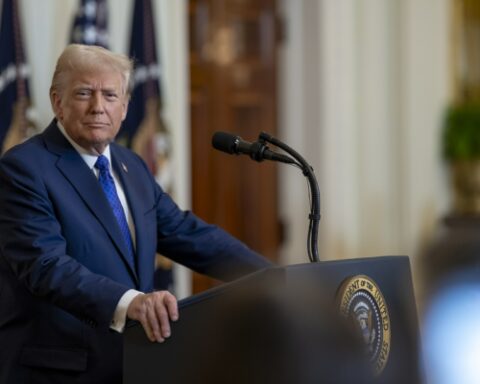
In February 2025, Trump signed an executive order permitting sanctions on the court, accusing it of engaging “in illegitimate and baseless actions targeting America and our close ally Israel.” Since then, the administration has blacklisted more than a dozen individuals and NGOs tied to the court. Those sanctions are being challenged in U.S. courts.