
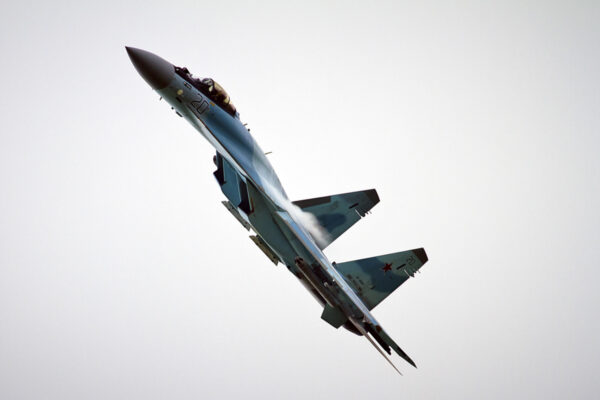
Russia has sharply escalated its air war against Ukraine, launching a punishing bombing campaign that targets bridges, railways, power plants, farms and factories in what Ukrainian officials have likened to “total war.”
Earlier this month, Russia bombed two of Kyiv’s vital east-west bridges over the Dnipro River for the first time since its full-scale invasion began. The strikes on the Pivnichnyi and Pivdennyi bridges, which link the city’s largely residential east with its business and administrative center in the west, left the capital gridlocked. Some commuters walked more than a mile across the river, while others stayed home, fearing a repeat attack.
“I think things are going to get really bad,” Kyiv resident Iulia Po said, noting that residents have survived without heating or electricity but have not yet faced a broken sewage system.
Since the end of August, Russian drones and missiles have been hitting Kyiv in daylight, not just at night, with less warning than before.
The Kremlin has not publicly admitted to targeting Ukraine’s civilian economy and claimed the Kyiv bridges were legitimate targets used to move troops and military cargo. But its target list tells a different story.
Naftogaz, Ukraine’s state gas monopoly, has suffered more than 300 strikes since the start of the year, compared with 229 in all of 2025. President Zelensky said Monday that Russia hit six energy sites after Donald Trump announced an “energy ceasefire” on Sunday.
Russia has also struck data centers and telecom facilities, disrupting air raid warnings, disabling elevator cards in high-rise buildings and forcing some government services, such as passport issuance, to be suspended.
Ukraine’s state rail system has been hit 1,700 times this year. In Kramatorsk, a Russian glide bomb struck two civilian buses, killing at least 30 people.
FARMERS AND INDUSTRY DEVASTATED
Agriculture Minister Taras Vysotskyi told the Financial Times that Ukraine is nearly out of reserve locomotives to move its grain. Only 2.4 million tonnes of agricultural products, about 46% of the normal total, left the country in September, with the Black Sea now effectively closed to shipping.
The steel industry has fared even worse. Zaporizhstal shut down indefinitely after repeated missile strikes, and ArcelorMittal Kryvyi Rih, Ukraine’s largest steelworks, announced it could not reopen after attacks killed five workers.
RUSSIA OUTPRODUCING THE WEST
New jet-powered Shahed drone variants can reach 375 mph, and Ukraine’s interception rates plunged from around 90% to less than 60% when they first appeared, according to the Ukrainian air force.
Ukrainian military intelligence estimates Russia produces more than 200 ballistic and cruise missiles and roughly 3,000 jet-powered kamikaze drones every month. The U.S. built just 620 PAC-3 interceptors in 2025.
“They are doing it now because they can,” said Oleksandr Danylyuk, chairman of the Ukrainian Centre for Defence Reforms. “Russia won the financial competition.”
UKRAINE NOT BREAKING YET
Still, Ukraine is fighting back. Naftogaz enters winter with about 14.6 billion cubic meters of gas in storage, above last year’s level, and Ukraine has begun deploying AI-assisted machine gun turrets against jet-powered drones.
Recent polling found more than 60% of Ukrainians willing to endure the war for as long as necessary.
“The mood is definitely depressed, but at this stage I do not see anything like a catastrophic collapse of morale,” said Ukrainian political scientist Volodymyr Fesenko.