

China is now reportedly signaling that it has weathered the Trump administration’s aggressive tariff strategy—at least for now—after posting a record-shattering annual trade surplus that exceeded $1 trillion as of November. New customs data released Monday shows that China’s export machine remains powerful, even as its trade relationship with the United States continues to shrink under the weight of tariffs and geopolitical tension.
According to the Associated Press, China’s exports jumped 5.9% year-over-year in November, reaching $330.3 billion after a decline the previous month. Over the first 11 months of the year, China’s surplus surged 22.1%, hitting an unprecedented $1.08 trillion and surpassing last year’s full total of $992 billion. That milestone comes despite collapsing shipments to the United States, which dropped nearly 29% compared to 2024—marking eight straight months of decline as the U.S. continues working to rebalance a long lopsided trade relationship.
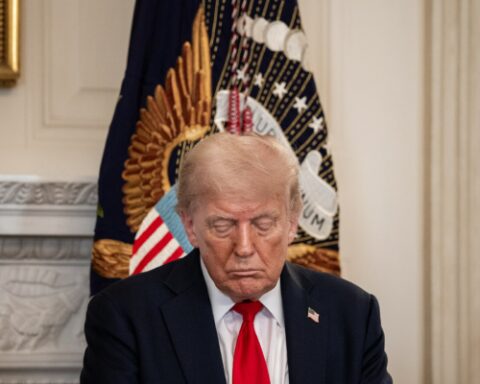
The new figures come shortly after President Donald Trump and Chinese leader Xi Jinping reached a temporary trade truce in South Korea in late October. Under the agreement, the U.S. lowered some tariffs on Chinese products, while Beijing pledged to lift rare-earth export restrictions and resume purchases of American soybeans. Economists say the November numbers likely do not yet reflect those tariff reductions. ING economist Lynn Song wrote that the impact “should feed through in the coming months.”
China’s import growth remained modest, rising 1.9% in November after a 1% gain in October.
Much of China’s swelling surplus is being driven not by trade with the United States, but by aggressive expansion into other markets. As of November, exports to the European Union rose 14.8%, shipments to Australia jumped 35.8%, and exports to Southeast Asian nations climbed 8.2%, according to ING. China has leaned heavily on developing regions—including Africa and Latin America—to compensate for shrinking access to the U.S. market under Trump’s tariffs.
But China’s widening trade gap is raising alarms across the globe, including in Europe. French President Emmanuel Macron, returning from a three-day state visit to China, warned that Europe may be forced to impose its own tariffs if Beijing refuses to address the imbalance. He told Les Echos that China is “killing their own customers” by importing too little from Europe and warned that the EU could take “strong measures” similar to those used by the United States.
If Europe does move ahead with tariffs, Song cautioned, it would pose “a significant risk to the external demand outlook for China,” according to Bloomberg.
Meanwhile, in the United States, the trade deficit has grown substantially despite the administration’s tough stance on China. Federal data released in November shows the U.S. goods and services deficit rising by $142.5 billion—up 25% year-over-year. Exports grew 5.1%, but imports increased 9.2%, evidence that even high global tariffs have not yet reshaped America’s decades-old consumption patterns.
China’s record surplus underscores the scale of the challenge facing the United States and its allies: a foreign competitor willing to dominate global markets even as Western nations take steps to push back. Whether the trade truce holds—and whether the U.S. and Europe escalate further—could determine the next phase of this economic standoff.
[READ MORE: Former Royal Navy Chief Sounds Alarm: Says U.K. Can No Longer Manage Its Submarine Fleet]