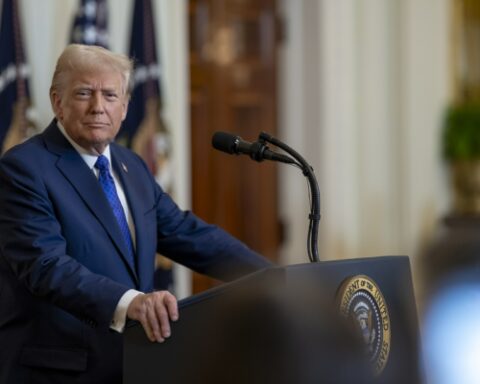


President Donald Trump signaled a sharper tone toward Russian President Vladimir Putin on Wednesday, sharing a New York Post op-ed that blasted the Russian leader as a “dictator” whose “lies” and “hatred” are blocking any chance of a peace deal in Ukraine — a notable shift from Trump’s often more measured and pragmatic posture toward Moscow.
Trump posted the op-ed to his Truth Social account without additional commentary, simply amplifying the headline and link. The piece took direct aim at Putin, arguing that Russia, not Ukraine, is standing in the way of ending the war. The move stood out precisely because Trump has historically spoken about Putin in more conciliatory terms, often emphasizing diplomacy and deal-making over public condemnation.
The post came just days after Putin claimed that Ukraine had attempted to strike his residence in Russia’s Novgorod region using drones. Ukrainian President Volodymyr Zelensky flatly rejected the accusation, calling it a fabrication designed to justify further Russian aggression.
“This alleged ‘residence strike’ story is a complete fabrication intended to justify additional attacks against Ukraine, including Kyiv, as well as Russia’s own refusal to take necessary steps to end the war,” Zelensky wrote on social media. He dismissed the claim as “typical Russian lies” and said there was no evidence to support it.
Despite Ukraine’s denial, Trump suggested earlier this week that he found Putin’s claim credible, saying he was “very angry” about the alleged incident. Those remarks drew criticism and ridicule from some observers, especially when Trump also claimed that “Russia wants to see Ukraine succeed,” a statement many found difficult to reconcile with Moscow’s continued military campaign.
Over the years, Trump has frequently spoken positively about Putin’s strength and leadership style, while maintaining a far more contentious relationship with Zelensky. Critics have long argued that Trump appears more comfortable dealing with Putin than with the Ukrainian leader, an impression reinforced by recent diplomatic optics.
When Putin met with Trump in Alaska, the administration rolled out a red carpet welcome for the Russian president. By contrast, when Zelensky arrived in Miami on Sunday, no American officials were sent to greet him. That contrast fueled further debate over Trump’s approach to the two leaders.
Against that backdrop, Trump’s decision to circulate an op-ed sharply attacking Putin caught attention. The New York Post piece, headlined “Putin ‘attack’ bluster shows Russia is the one standing in the way of peace,” accused the Russian leader of manufacturing excuses for continued war and refusing to engage seriously in negotiations.
While Trump did not add his own words to the post, the choice to elevate such a blunt critique suggested frustration with Putin’s recent actions and rhetoric. For supporters, the move underscored Trump’s willingness to pressure all sides when he believes they are acting in bad faith. For critics, it raised questions about whether the president’s approach to Russia is shifting or simply reacting to the moment.
The episode highlights the complexity of Trump’s foreign policy style, which often blends personal diplomacy with sudden public rebukes. Trump has long argued that his unconventional approach gives him leverage others lack, even when it draws criticism at home and abroad.
By sharing an op-ed that openly derides Putin as an obstacle to peace, Trump signaled that his patience may be wearing thin — or at least that he is willing to publicly call out Russia when he believes it is undermining prospects for ending the war. Whether the post marks a lasting change in tone or a temporary flare remains to be seen, but it added a new wrinkle to Trump’s already unconventional handling of the Ukraine conflict.