
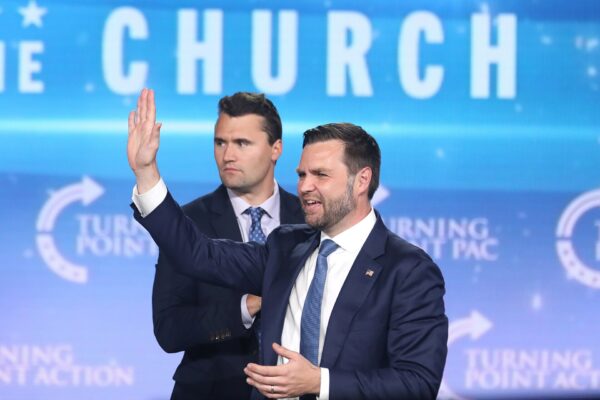
Vice President JD Vance said Wednesday that the Trump administration is moving aggressively to form a global trading bloc with allies and partners aimed at stabilizing critical mineral markets and pushing back against China’s overwhelming dominance.
Speaking to representatives from more than 50 countries, Vance emphasized that the administration’s strategy is focused on diversifying supply chains while strengthening partner nations that play a role in securing essential resources. He said cooperation among like-minded countries is necessary to protect shared economic and national security interests.
Critical minerals are foundational to modern life and national defense, used in everyday technology such as smartphones and computers, as well as in key military equipment. Currently, much of the world depends on China for these resources, with China controlling roughly 70 percent of rare earth mining and about 90 percent of rare earth processing. Vance framed that imbalance as a strategic vulnerability that must be addressed.
“This morning, the Trump administration is proposing a concrete mechanism to return the global critical minerals market to a healthier, more competitive state,” Vance said. He described the proposal as a preferential trade zone for critical minerals, protected from external disruptions and supported by enforceable price floors.
The remarks came during the inaugural Critical Minerals Ministerial, hosted by the U.S. Department of State, just days after President Donald Trump announced a new initiative known as Project Vault. The plan is designed to create a strategic stockpile of critical minerals to shield American companies and consumers from shortages and sudden disruptions in global supply chains.
Vance said a top priority of the administration is preventing foreign governments and companies from flooding markets with cheap critical minerals that undercut U.S. manufacturers. According to the vice president, the proposed preferential trade zone would establish reliable production centers and supply chains insulated from manipulation by outside actors, including China.
Following Vance’s address, Secretary of State Marco Rubio told attendees that the gathering should lead to tangible action, not just more meetings. Rubio argued that decades of outsourcing manufacturing had left the United States vulnerable, saying the country had effectively outsourced its economic security and future.
Rubio said the United States had become dependent on whoever controlled supply chains for critical minerals and described the ministerial as an important first step toward correcting that mistake by bringing together innovation and shared expertise.
The administration has already taken steps in that direction, announcing agreements with Japan, Mexico, and the European Union to help develop a more secure critical mineral supply chain. U.S. Trade Representative Jamieson Greer said the effort sends a clear signal that major market-oriented economies are committed to a new framework for preferential trade in critical minerals. He said the resulting action plans would help lay the foundation for a binding agreement among like-minded partners.
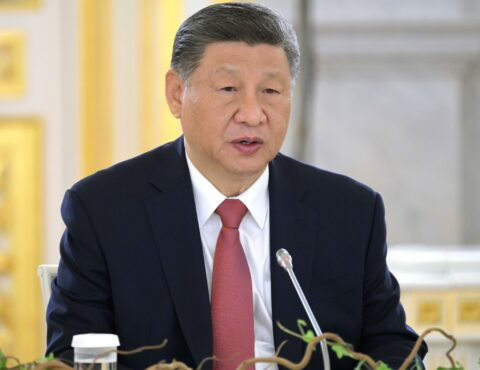
As U.S. officials met with foreign representatives, Trump also revealed that he had an “excellent telephone conversation” with Chinese President Xi Jinping. Trump said the two discussed a range of issues, including trade, Taiwan, the Ukraine-Russia war, and the possibility of China purchasing American oil and gas. He described his relationship with Xi as extremely good and said both leaders understand the importance of maintaining it.
Project Vault will be backed by a $10 billion loan from the U.S. Export-Import Bank, along with $1.67 billion in private capital. Administration officials say the initiative represents a major step toward reclaiming control over critical supply chains and reducing reliance on adversarial powers.