
President Donald Trump announced Sunday that U.S. forces took decisive action against an Iranian vessel attempting to breach an American naval blockade, marking another flashpoint in a conflict that continues to test both military resolve and diplomatic patience.
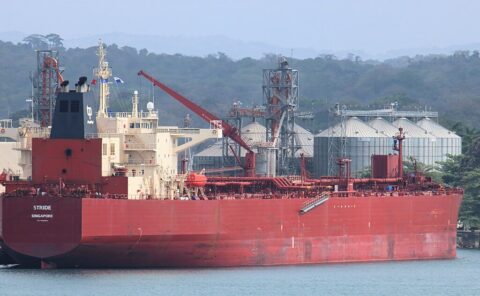
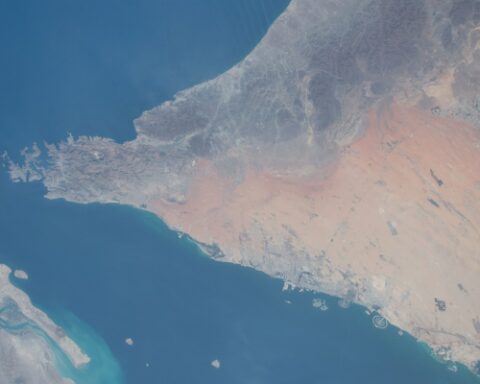
In a post on Truth Social, Trump said the U.S. Navy confronted an Iranian-flagged cargo ship identified as the TOUSKA in the Gulf of Oman after it attempted to push through the blockade in the strategically vital Strait of Hormuz. According to the president, the vessel—nearly 900 feet long and described as weighing almost as much as an aircraft carrier—was warned to stop but refused to comply.
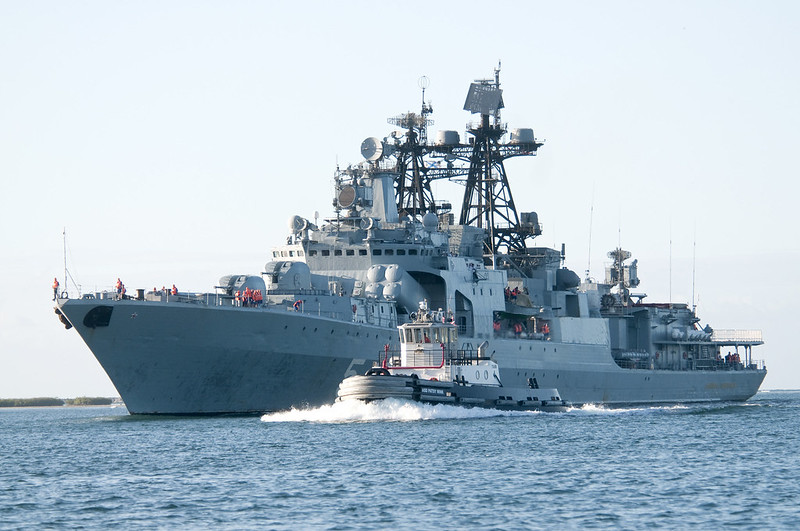
Trump said the guided missile destroyer USS Spruance intercepted the ship and, after the crew ignored repeated warnings, disabled it by striking the engine room. “It did not go well for them,” Trump wrote, adding that U.S. Marines have since taken custody of the vessel. He also noted that the TOUSKA was already under U.S. Treasury sanctions due to what he described as a prior history of illegal activity.
“We have full custody of the ship, and are seeing what’s on board!” the president added, signaling that the situation remains fluid as authorities assess the vessel and its contents.
As of Sunday, Iranian officials had not publicly responded to the incident, leaving unanswered questions about how Tehran may react to the escalation. The lack of immediate comment underscores the fragile and unpredictable nature of the standoff, particularly as both sides continue to navigate a conflict that has already stretched across military and economic fronts.
The confrontation at sea comes at a critical moment for diplomatic efforts. Vice President JD Vance was expected to travel to Islamabad, Pakistan, for a potential second round of peace negotiations. He is believed to be joined by Jared Kushner and Special Envoy Steve Witkoff, along with Iranian representatives.
However, uncertainty looms over whether the talks will proceed as planned. Iran has not confirmed its participation, though its chief negotiator, Mohammed Bagher Qalibaf, said on state television that “there will be no retreat in the field of diplomacy.” The statement suggests a willingness to remain engaged, even as tensions continue to flare.
Pakistan has also stopped short of officially confirming the next round of discussions. Still, signs of preparation are underway. According to the Associated Press, authorities in Islamabad have begun tightening security, while mediators work to finalize arrangements. U.S. advance teams are reportedly already on the ground.
The urgency of the moment is hard to ignore. The first round of talks concluded just last weekend after 21 hours without a breakthrough. Vance indicated at the time that the central sticking point remained Iran’s nuclear ambitions, a long-standing issue that continues to complicate efforts at de-escalation.
While the Navy’s swift action may be viewed by some as a necessary show of strength, the broader picture reflects a conflict still searching for an off-ramp. Military encounters like this one can reinforce deterrence, but they also highlight the narrow margin for error as both sides inch forward—uneasily—on parallel tracks of confrontation and diplomacy.
[READ MORE: Report of Cash-for-Uranium Deal Raises Questions as Trump Rejects Claims]