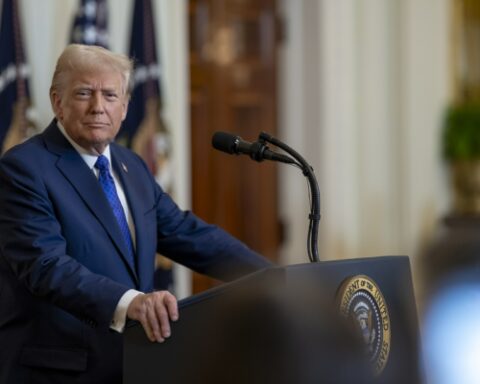

President Donald Trump on Friday took another firm step in his administration’s hardline approach toward Cuba, signing an executive order that significantly broadens sanctions on the island’s communist government. The move underscores a continued effort to hold Havana accountable—while also raising fresh questions about the broader consequences of sustained economic pressure.
The executive order expands sanctions beyond traditional targets, now reaching “agents, officials, or material supporters” of the Cuban government, including those tied to its security apparatus or implicated in corruption and human rights abuses. It also casts a wider net globally, aiming at individuals and institutions that facilitate the regime’s operations.
In a notable escalation, the order restricts Cuba’s access to the international financial system by imposing secondary sanctions. That means foreign financial institutions and entities engaging in transactions with sanctioned Cuban-linked individuals could face penalties themselves, including potential exclusion from U.S. markets. The administration has made clear that even indirect support for the Cuban government could now carry significant consequences.
The White House framed the decision as a necessary response to national security concerns, stating the administration is working to counter what it described as Cuba’s “malign influence.” Officials emphasized that the policy is designed to hold the Cuban government—and those who sustain it—accountable for activities tied to regional instability, support for hostile actors, and threats to U.S. foreign policy interests.
At the same time, the timing of the sanctions reflects a broader strategy: increasing pressure on Havana amid a worsening humanitarian crisis on the island. That crisis has intensified in recent months, particularly after the United States cut off oil shipments from Venezuela and Mexico earlier this year, triggering a sharp economic decline.
While the administration is pushing forward with sanctions, it has also quietly pursued diplomatic engagement. The State Department reportedly sent a delegation to Cuba in April to explore potential solutions to the humanitarian situation. Those talks suggest that even as Washington tightens the screws economically, it remains open—at least in theory—to negotiation.
President Trump himself has previously floated far-reaching possibilities regarding Cuba’s future. In March, he suggested the United States could take dramatic action, remarking, “Whether I free it, take it, I think I can do anything I want with it.” The comment reflected the administration’s assertive posture, though it also highlighted the uncertainty surrounding how far such pressure campaigns could go.
For his part, Cuban President Miguel Díaz-Canel has not entirely closed the door on dialogue. In an April interview, he acknowledged that an agreement with the United States might be possible, though he cautioned it would be difficult. “Dialogue and deals… are possible,” Díaz-Canel said, “but they’re difficult.”
That tension—between pressure and negotiation—now defines the current moment. The administration’s strategy appears rooted in the belief that economic force can compel change. Yet as sanctions deepen and conditions on the island deteriorate, the human toll of such measures remains an unavoidable part of the equation.
Whether this latest escalation will bring Cuba closer to reform—or simply deepen the crisis—is a question that remains unresolved.
[READ MORE: Trump Declares U.S. Has ‘Already Won’ Iran War, Pushes for Stronger Outcome]