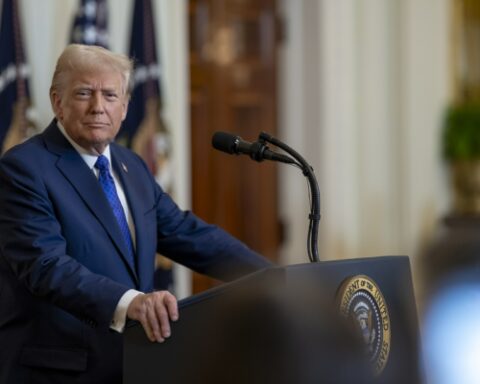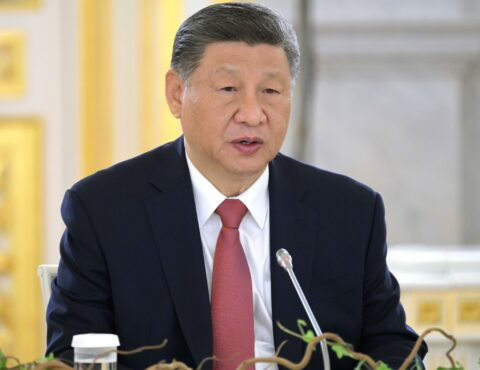


President Donald Trump reportedly suggested during private talks with Chinese President Xi Jinping that the United States, China, and Russia should cooperate in opposing the International Criminal Court, according to a new report from the Financial Times.
The reported remarks came during a broad series of discussions between Trump and Xi in Beijing last week that also included conversations surrounding Russia’s ongoing war in Ukraine and the shifting balance of global power among major nations.
According to individuals briefed on the summit discussions, Trump argued that the three world powers share common interests when it comes to resisting what his administration views as the ICC’s growing politicization and judicial overreach.
Neither the White House nor the Chinese Embassy in Washington publicly commented on the reported remarks when contacted by the Financial Times.
The discussions unfolded as Trump continues attempting to recalibrate relations with Beijing while also maintaining diplomatic contact with Russian President Vladimir Putin amid the prolonged conflict in Ukraine. Putin is expected to travel to China this week for additional meetings with Xi, further underscoring the increasingly complex diplomatic landscape surrounding the war.
Trump and many of his allies have long criticized the ICC, accusing the Hague-based court of exceeding its authority and unfairly targeting sovereign nations that never consented to its jurisdiction.
Since returning to office last year, Trump has significantly escalated pressure on the court. His administration has imposed sanctions on 11 ICC officials, including the court’s chief prosecutor and eight judges.
In a February 2025 executive order, Trump accused the court of engaging in “illegitimate and baseless actions targeting America and our close ally Israel” after the ICC pursued investigations involving U.S. and Israeli officials.
The United States and Israel are not parties to the Rome Statute, the treaty that established the ICC. Successive administrations from both parties have at times expressed skepticism toward the court, though Trump has taken a far more confrontational approach than most previous presidents.
Russia and China have likewise rejected the court’s authority.
Russia formally withdrew from the ICC in 2016 after the court classified Moscow’s annexation of Crimea as an occupation. China has consistently opposed the court’s jurisdiction as well, arguing that international institutions should not interfere with state sovereignty.
The reported proposal for cooperation among Washington, Beijing, and Moscow against the ICC highlights the unusual diplomatic alignments that can emerge even among rival global powers when questions of sovereignty and international legal authority are involved.
At the same time, the discussions come against the backdrop of a grinding war in Ukraine that continues reshaping geopolitical relationships across the globe. While Trump has repeatedly called for negotiations to end the conflict, tensions between Russia and Western nations remain high, and there is little public indication that a settlement is close.
The possibility of the world’s three largest military powers finding common ground against an international court also reflects growing skepticism among many governments toward supranational institutions that they believe operate without sufficient accountability or restraint.
Critics of prolonged foreign conflicts and international interventions have increasingly argued that global institutions often become entangled in political disputes far removed from their original missions. Supporters of the ICC, however, maintain that the court remains an important mechanism for pursuing accountability in war crimes and international human rights cases.
For now, neither Washington nor Beijing has publicly confirmed the contents of the reported discussions. But the report offers another glimpse into how Trump’s foreign policy approach continues blending confrontation with strategic dealmaking, even with nations often viewed as America’s chief geopolitical competitors.