
President Donald Trump on Tuesday defended the administration’s newly signed agreement with Iran, arguing that the deal advances U.S. interests by securing extensive nuclear inspections, providing humanitarian relief, and reopening the strategically important Strait of Hormuz.
In a post on Truth Social, Trump pushed back against critics of the agreement and highlighted provisions he said would ensure both accountability and stability as negotiations continue toward a broader long-term peace arrangement.
Central to the president’s defense was a mechanism allowing certain funds and sanctions relief to be released under strict American oversight. Trump emphasized that any money authorized by the U.S. Treasury would not flow directly to Iran but instead would be placed in an escrow account controlled by the United States.
According to the president, those funds will be used exclusively for the purchase of food and medical supplies from American producers.
“The Money and/or Sanctions that the U.S. Treasury is releasing goes into escrow, controlled by the U.S.A., and will be used for the purchase of food and medical supplies, exclusively from the United States, including Corn, Wheat, and Soybeans from our great American Farmers,” Trump wrote.
Trump said the aid is necessary because Iran is facing a humanitarian crisis and requires immediate assistance.
“These are things that are desperately needed by Iran,” he continued. “This is a humanitarian crisis, and I feel it is necessary to help, NOW, before it is too late.”
The president also expressed optimism about the ongoing diplomatic process, saying negotiations aimed at securing a more permanent peace agreement “are going well.”
The current agreement follows months of conflict that began after the Trump administration and Israel launched strikes on Iran in late February amid deteriorating negotiations over a new nuclear arrangement. The newly signed memorandum of understanding reopens discussions focused on limiting Iran’s nuclear capabilities, a subject that remains at the center of talks between the two sides.
Trump pointed to what he described as a major concession from Tehran: an agreement to permit extensive nuclear inspections moving forward.
Vice President JD Vance stated Monday that Iran agreed during Sunday’s initial peace talks to allow the International Atomic Energy Agency back into the country. The organization is responsible for promoting peaceful uses of nuclear technology and plays a key role in international nuclear monitoring efforts.
Echoing Vance’s comments, Trump argued that Iran has committed to an unprecedented level of oversight.
“Despite their protestations and false statements to the contrary, coupled with the drumbeat of the Fake News, which is doing everything possible to make the U.S. Victory as small and insignificant as possible, Iran has fully and completely agreed to highest level Nuclear inspections long into the future (Infinity!!!),” Trump wrote.
He added that the inspections would ensure what he called “Nuclear Honesty.”
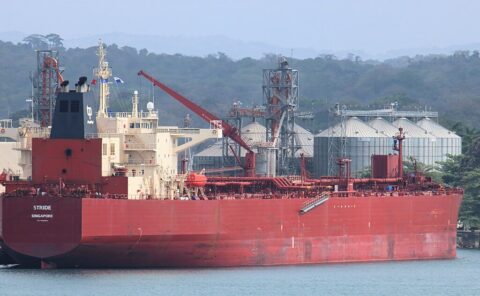
The agreement also addresses the future of the Strait of Hormuz, one of the world’s most important oil transit routes. The waterway has faced significant disruption during the conflict, including a U.S. naval blockade that effectively restricted traffic through the corridor.
Under the new arrangement, the Strait of Hormuz will remain open, allowing commercial shipping to resume through the critical passageway.
Still, uncertainty remains. Iran has recently threatened to close the strait again, citing Israeli military actions in Lebanon.
Trump acknowledged those concerns while making clear that U.S. forces remain prepared to act if circumstances change.
“I have agreed to allow the Hormuz Strait to remain OPEN, with no further Naval Blockade,” the president wrote. “However, all ships are remaining in place should it be necessary to reinstitute the Blockade, which seems, at this point, highly unlikely.”
For now, the administration is presenting the agreement as a step toward reducing tensions through negotiations rather than continued conflict, while maintaining a military presence intended to preserve the terms of the deal.