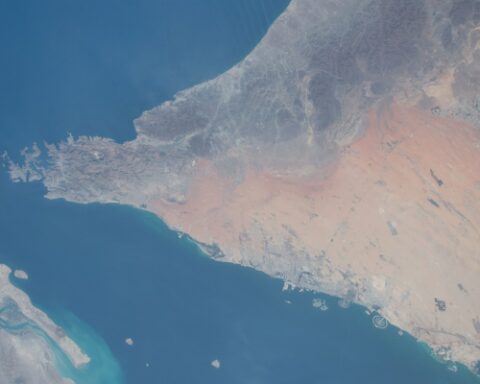

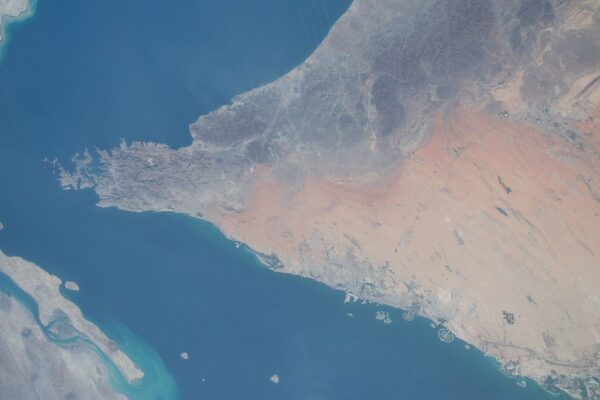
Ship traffic through the Strait of Hormuz has dropped to its lowest level in five weeks, according to a Reuters report citing trade intelligence company Kpler, as the ongoing conflict involving Iran continues to disrupt one of the world’s most important maritime corridors.
Kpler found that only six ships passed through the Strait of Hormuz on Sunday, marking the lowest daily total in five weeks, Reuters reported. The company also found that oil and gas tanker traffic through the strategic waterway had fallen to its lowest point since May 25.
While the figures point to a sharp slowdown in commercial shipping, industry sources told Reuters that the full picture may be more difficult to determine. According to those sources, an increasing number of vessels are switching off their public tracking systems, making it harder to accurately measure the true volume of ship traffic moving through the strait.
The decline comes as the war involving Iran approaches the five-month mark, a conflict that has fueled instability across the Middle East while contributing to higher oil and gas prices. The prolonged fighting has also drawn criticism from Americans, with recent polling showing that the conflict is largely unpopular.
Tensions escalated further over the weekend as both the United States and Iran asserted authority over the Strait of Hormuz, a vital waterway for global energy supplies and international commerce.
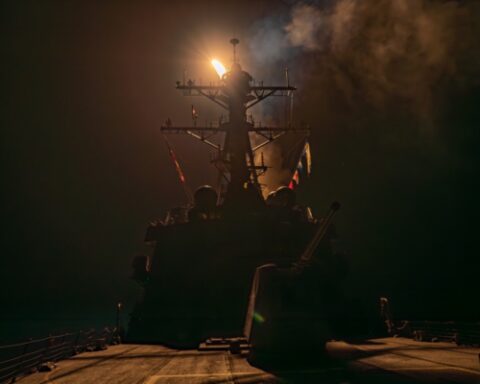
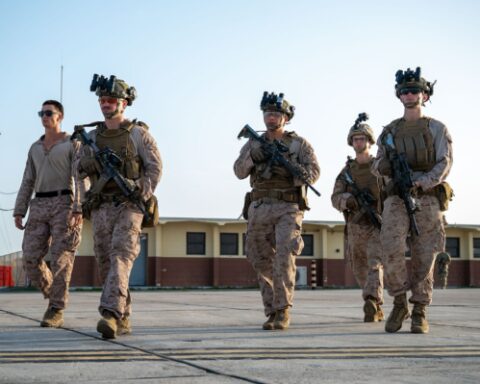
In a post published Sunday night on the social media platform X, U.S. Central Command announced that it had “completed a new wave of offensive strikes against Iran” earlier that day. According to Centcom, the operation struck dozens of targets across multiple locations using precision munitions in an effort to reduce Iran’s ability to continue attacks on international shipping traveling through the Strait of Hormuz.
Centcom also emphasized the strategic importance of the waterway, stating that the Strait of Hormuz remains a critical route for global trade.
“The Strait of Hormuz is a vital maritime corridor for global trade. Iran does not control it,” the command said in its statement.
The U.S. military added that its forces remain positioned to ensure commercial vessels can continue navigating the area despite what it described as Iran’s continued aggression, harassment, threats, and declarations regarding the waterway.
Iran quickly pushed back against those claims.
According to The Associated Press, the Islamic Revolutionary Guard Corps responded by declaring that “the Strait of Hormuz is our territory, and we will not allow a rogue and child-killing army from the other side of the world to continue its illegal interference in it.”
The exchange underscored the competing claims over one of the world’s most strategically important shipping lanes, where tensions have intensified alongside the broader conflict.
The fighting has also had an impact closer to home for American consumers.
Following last weekend’s military exchanges, the national average price of a gallon of regular gasoline climbed from roughly $3.80 a week earlier to approximately $3.87 as of Monday morning, according to AAA, reflecting the market’s reaction to continued instability surrounding the Strait of Hormuz and the broader conflict in the region.