
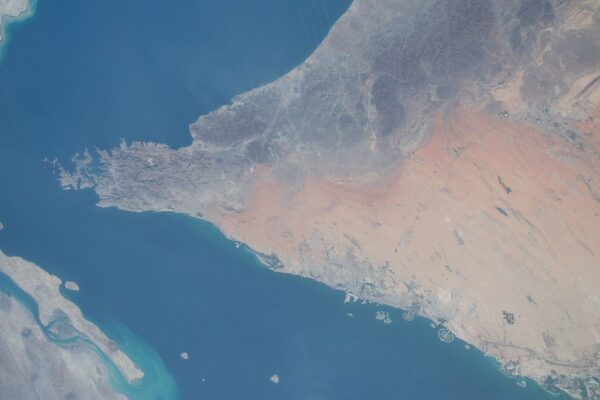
Moving oil through the Strait of Hormuz has become a dangerous but lucrative job, with ship captains relying on the cover of darkness and “old school” navigation to keep tankers moving, according to a new report.
Ship captains told Bloomberg reporter Alex Longley about the lengths they’ve gone to in order to keep the world’s oil flowing through the strait as the war in Iran has stretched on for more than seven months. That includes staying in constant contact with the American military and being ready for an attack at all times.
“Tankers are always at risk all the time,” one captain told the outlet. “It’s a very dangerous vessel.”
The captains said they’ve made the journey at night and in radio silence, with no lights or phones, often leaning on traditional navigation skills and minimal radar.
One captain described steering his 300-meter-long ship along the coast of Oman, using the coastline and lighthouses to find his way.
“I’m just lucky because I still remember the traditional navigation, the old school,” he told the outlet. “They required no navigational lights. It’s quite challenging.”
The threat of strikes is ever-present, the captains said. Crews place sandbags and water-filled drums near the ship’s bridge as a barrier and keep the emergency fire pump running for the entire trip.
One captain recounted making the transit after watching a ship ahead of his come under attack, and steering around the damaged vessel. After seeing the blast, he was told by the U.S. Navy that other ships beyond his were still able to continue their voyages and that he should do the same.
On another occasion, it was the captain’s own ship that was attacked, though the vessel sustained no damage and no crew members were injured. It was one of many close calls, according to Bloomberg.
Even when his trips ended without incident, the danger was never far off.
“It can happen any time,” the captain said.
While transferring cargo to another ship outside Hormuz, he and his crew heard vessels broadcasting that they were under attack near the strait.
In the end, the decision to make the crossing rests with each ship’s captain, according to Bloomberg. As long as captains are willing to go, millions of barrels of oil a day will continue reaching global markets.
The risks are real. The International Maritime Organization estimates that 24 seafarers have died in attacks across the region since the war began.
U.S. Central Command told Bloomberg that the American military has “assisted thousands of ships through the Strait of Hormuz in recent months by providing coordinated protection.”
“We remain laser-focused and will continue working with US interagency partners, regional countries, and the shipping industry to increase the maritime traffic flow,” CENTCOM said in a statement.
The captains said ships check in with the U.S. military every 30 minutes, and they can often see military support flying overhead.
For those willing to take on the risk, the payoff is significant. Bloomberg previously reported that ship owners have offered the equivalent of six months’ pay for the transits.