
The U.S. Army has begun training soldiers to rapidly dig temporary graves for fallen troops, preparing for the possibility of a large-scale conflict in which bodies cannot be quickly brought home.
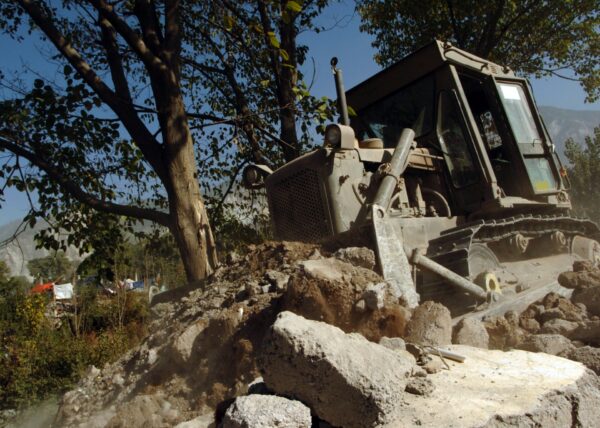
Army engineers, preventive medicine teams, chaplains and fatality management specialists took part in a mass temporary burial exercise on Oct. 21 at Fort Bragg, North Carolina, Army Times reported Monday.
The goal of the training was to preserve remains so they can later be identified and returned to their families.
In an Oct. 22 release, the Army described the exercise as a critical test to validate the feasibility of battlefield temporary interment, something the service has not carried out at scale since the Korean War.
The exercise was designed to determine whether modern earthmoving equipment can keep pace with the demanding timelines of a mass-casualty environment, according to the Army.
“If we went to war tomorrow, we would be making this up as we went along,” said Sgt. 1st Class Delbert Ruede, the senior fatality management noncommissioned officer for the 3rd Corps Sustainment Command.
Ruede said the exercise gave soldiers a chance to examine how the military would respect, honor and systematically manage its fallen in a high-intensity conflict. He added that the Army is taking a scientific, field-tested approach so it can maintain control and care for the dead with dignity.
Such training was rare during the two decades of the War on Terror. American air superiority in Iraq and Afghanistan allowed the military to fly the remains of fallen service members back to the United States quickly.
A future large-scale combat operation against a more capable adversary may not offer that same advantage, according to Army Times.
Under U.S. military policy, human remains are to be evacuated during a conflict whenever operations allow. However, mortuary affairs guidance permits temporary graves when the dead cannot be moved safely, when transportation is unavailable, or when deaths result from chemical, biological, radiological or nuclear weapons.
The Department of War did not immediately respond to a request for comment.
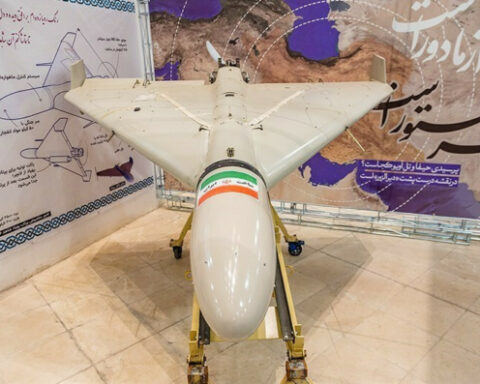
The training comes as the U.S. military remains engaged in a conflict with Iran that began in February. Iran claimed last week that it had struck multiple vessels in the Persian Gulf and warned of a major escalation against U.S. forces.
The Pentagon has increasingly shifted its focus toward preparing for large-scale conflict with near-peer adversaries, a departure from the counterterrorism operations that dominated U.S. military planning for much of the past 20 years.
The Fort Bragg exercise marks one of the most visible signs yet that the Army is planning for the grim realities of such a war, including casualty levels the U.S. has not faced in generations.