
President Donald Trump on Wednesday defended his decision to go to war with Iran, even as his own vice president publicly blamed the conflict for Republicans’ sweeping losses in Tuesday’s midterm elections.
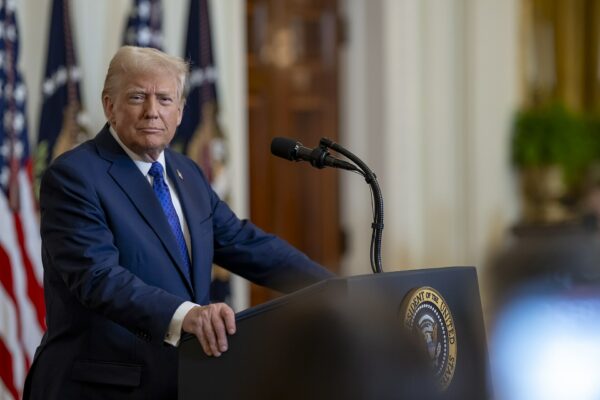
The president was asked about Vice President JD Vance’s comments during his first public appearance since Democrats captured majorities in both the House and the Senate, an outcome that saw most of Trump’s preferred candidates go down to defeat.
“Vice President Vance said the reason Republicans lost last night was the War in Iran,” a reporter began, before Trump cut in to respond.
Trump conceded that Vance had a point, acknowledging the war’s effect on Americans’ wallets.
“I think it’s largely true, because it drove the gasoline up a little bit short term,” Trump told reporters.
But the president made clear he has no regrets about the decision.
“If I had to do it again, I’d do it again because long term, it’s the only answer. You can’t let Iran have a nuclear weapon,” he said.
Asked whether he still believed the conflict had been worth it, Trump answered simply, “I do, yeah.”
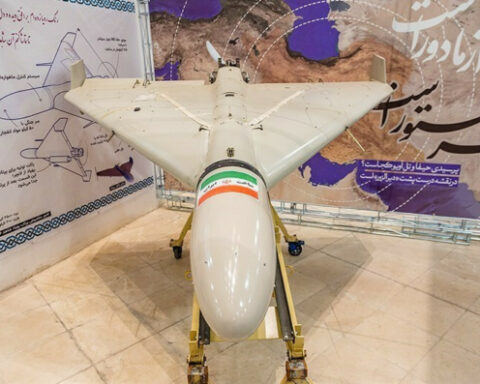
The president also brought up his White House ballroom, currently under construction, which he has previously touted as “drone proof, missile proof, and bullet proof.” Trump suggested the building might be the only structure left standing if Iran ever obtained nuclear weapons.
Looking ahead to a Congress under Democratic control, Trump said he would probably get along with the new majorities “unless they want to be destructive.”
Trump’s remarks came hours after Vance posted a lengthy statement on X in which he pointed squarely at the war.
“The reason we lost is the war. The president himself said so last night,” Vance wrote.
In the same post, the vice president addressed frustrated Republican voters directly, acknowledging that critics who had warned the party were right, and urging them to channel their anger into electing Republicans who share their worldview.
It is unusual for a sitting vice president to openly critique his own administration’s policy. Vance had not publicly opposed the war effort since Trump launched extensive strikes against Iran in February.
Vance was also part of a delegation that sought to lay the groundwork for a peace agreement with Tehran, but Iran refused to abandon its nuclear ambitions.
Vance campaigned at multiple rallies for Trump-backed candidates ahead of Election Day and is widely viewed as the front-runner for the 2028 Republican presidential nomination. His standing in prediction markets slipped, however, as Tuesday night’s results came in.
The dueling assessments from the president and vice president come as Republicans begin sorting through the wreckage of a night that handed Democrats control of Capitol Hill heading into the final two years of Trump’s term.
The question now facing the GOP is whether the party can recover before 2028 while the administration continues to stand behind a war that both its top two officials agree hurt Republicans at the ballot box.