
Israeli authorities announced Thursday that only one hostage’s remains are still being held in Gaza, after Thai officials confirmed the identity of another body recently handed over by Hamas. The Israel Defense Forces said the remains of Sudthisak Rinthalak — a Thai farmworker abducted from the orchard where he worked and murdered during Hamas’ Oct. 7, 2023 terror attacks — had been identified and returned.
That leaves only the remains of Master Sgt. Ran Gvili, an officer in Israel’s National Counter-Terrorism Unit and police force, still inside Gaza. Gvili, like Rinthalak, was seized and killed on October 7. The prime minister’s office confirmed Thursday that his body has not yet been recovered.
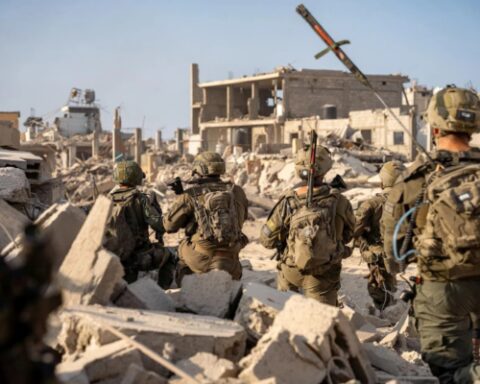
The update comes as a fragile ceasefire between Israel and Hamas continues to hold, despite intermittent small-scale clashes. The pause is part of the slow rollout of President Donald Trump’s Middle East peace plan — a deal that Hamas agreed to under pressure but has shown little willingness to fully honor. Central to the plan is Hamas’ disarmament and the transfer of Gaza’s governing authority to an international body led by Palestinian technocrats, backed by an Arab-state security force. But even as hostages’ remains are returned, it is unclear whether Hamas intends to meet those obligations.
Israel, preparing to reopen the Rafah crossing between Gaza and Egypt, has made its policy unequivocal: Palestinians will not regain access to the crossing until every hostage — or every set of remains — is returned. That condition underscores Israel’s distrust of Hamas, which continues to engage in sporadic firefights even after agreeing to Trump’s deal.
Meanwhile, Gazans themselves remain wary of Hamas’ intentions. The terror organization has continued practices such as public executions of rivals and suspected “traitors,” leaving many Palestinians doubtful that Hamas will genuinely step aside or abide by the restructuring plan the group claims to have accepted in October.
Although Hamas has returned all living hostages, the group has repeatedly dodged the core requirement of disarmament. In its initial agreement, Hamas insisted that any discussion of Gaza’s new governance must wait for “Palestinian national consensus and Arab and Islamic support” — signaling that the group intends to maintain leverage rather than relinquish control.
Hamas’ pattern of evasion has raised serious concerns about whether the ceasefire — and the broader peace framework — can endure. For now, Israel continues retrieving the final remains of those murdered on October 7 while bracing for the possibility that Hamas may renege on its commitments once international pressure eases.