

U.S. stock markets opened sharply lower Monday after escalating military strikes in the Middle East sent oil prices surging past $100 per barrel and fueled new concerns about the potential economic consequences of the conflict.
The Dow Jones Industrial Average dropped roughly 500 points shortly after the opening bell, a decline of about 1.1 percent. The S&P 500 index also opened in the red, falling 0.9 percent, while the Nasdaq composite slipped 0.7 percent in early trading.
The downturn follows a weekend of intensifying military action involving the United States, Israel, and Iran. Since airstrikes began targeting Iranian assets, financial markets have reacted nervously as investors weigh the possibility that a regional war could disrupt global energy supplies and ripple across the world economy.
Stocks have been trending downward since the United States and Israel began launching air strikes against Iran last weekend. Tehran responded with attacks of its own targeting American military bases and U.S. allies throughout the region, adding to the uncertainty surrounding the conflict.
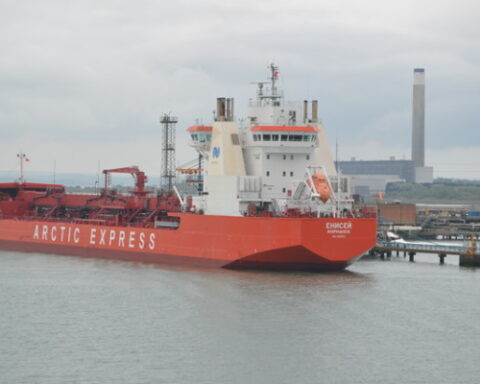
Much of the market anxiety centers on the Strait of Hormuz, one of the world’s most critical shipping routes for oil. Iran has refused to allow maritime trade through the narrow waterway while also striking oil infrastructure around the Persian Gulf.
Those actions have dramatically reduced the flow of crude exports and forced several Gulf states to cut back production, creating immediate pressure on energy markets.
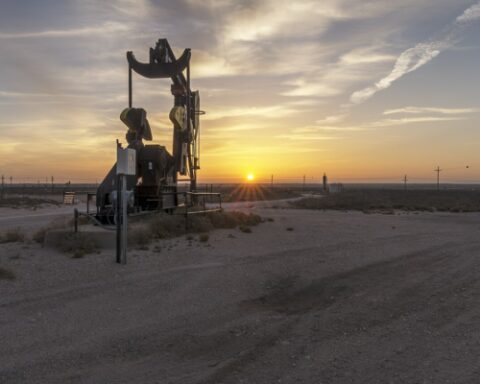
As trading opened Monday, a barrel of West Texas Intermediate crude oil was selling for $100.25, representing a 10 percent increase on the day. Brent crude, the international benchmark, was trading at $101.71 per barrel after climbing close to $120 during the weekend surge.
Such sharp swings in oil prices rarely stay confined to financial markets. Rising energy costs often filter quickly into everyday economic life, affecting everything from transportation to manufacturing.
Gasoline prices in the United States have already begun to climb in response to the spike in crude prices. Economists often warn that sustained increases in fuel costs can raise expenses across multiple industries, particularly those heavily dependent on transportation and energy.
While the market reaction has been swift, President Donald Trump has pushed back against concerns that the conflict could create long-term economic damage.
In a post on Truth Social Sunday night, Trump argued that temporary economic disruption is a small price to pay if the military campaign succeeds in eliminating Iran’s nuclear ambitions.
“Short term oil prices, which will drop rapidly when the destruction of the Iran nuclear threat is over, is a very small price to pay for U.S.A., and World, Safety and Peace,” the president wrote.
Trump dismissed critics who worry about the economic fallout, insisting that removing the nuclear threat posed by Iran would ultimately bring greater stability.
For now, however, the financial markets are reacting to the immediate uncertainty. Investors are closely watching the evolving situation in the Middle East, where military developments can quickly reshape the outlook for energy supplies and global trade.
History has shown that conflicts in oil-producing regions rarely remain contained to the battlefield. Even limited disruptions to production or shipping can send shockwaves through markets around the world.
As the conflict continues, the market turbulence serves as a reminder that wars fought thousands of miles away often find their way into the daily lives of Americans — whether through rising fuel prices, shaken markets, or the broader economic uncertainty that follows in the wake of geopolitical conflict.
[READ MORE: Trump Says Iran’s Next Leader Must Deliver Peace and Stability, Not Necessarily Democracy]