
The State Department has directed U.S. embassies and consular posts around the world to immediately reassess their security operations, following a wave of retaliatory attacks tied to the ongoing U.S.-Israeli conflict with Iran, according to multiple reports.
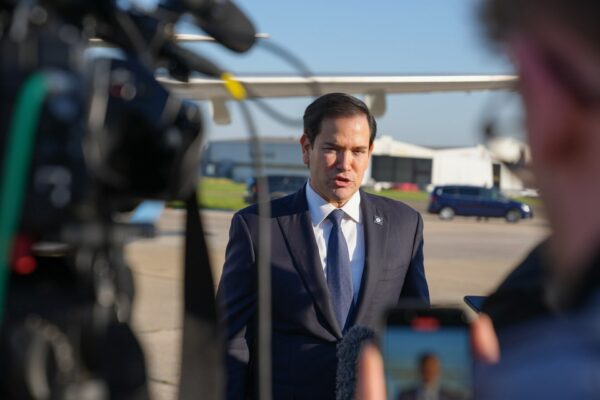
The order, delivered through diplomatic cables written by Undersecretary of Management Jason Evans and signed by Secretary of State Marco Rubio, reflects growing concern that violence in the Middle East could spread beyond the immediate region. Officials cited “the ongoing and developing situation in the Middle East and the potential for spillover effects” as the reason for the urgent directive.
Under the guidance, all U.S. diplomatic posts globally have been instructed to review their current security posture and convene Emergency Action Committees, or EACs. These committees, which bring together personnel from multiple agencies, are responsible for assessing threats and coordinating responses to potential attacks.
According to reports, the instruction applied broadly to “ALL posts worldwide,” underscoring the seriousness with which officials are treating the evolving security environment. While such measures are standard in times of heightened risk, the global scope of the directive signals a recognition that the current conflict may carry far-reaching consequences.
A State Department spokesperson declined to comment directly on the internal communications, calling their disclosure “inappropriate” and warning that such leaks could undermine efforts to protect U.S. personnel and facilities. The spokesperson emphasized that EAC meetings are a routine part of preparedness, designed to ensure coordination and readiness across diplomatic missions.
The department also noted that embassies in the Middle East had already convened Emergency Action Committees prior to the launch of Operation Epic Fury, suggesting that contingency planning was in place before the conflict escalated.
Still, the threat environment appears to be intensifying. Since the United States began its military offensive last month, U.S. embassies have come under increasing attack. Facilities in Iraq, Saudi Arabia, and Kuwait have all been targeted in retaliatory strikes. In response, embassies in Saudi Arabia and Kuwait were closed indefinitely in the days following the start of the conflict on February 28.
The risks are not confined to the Middle East. Norwegian police reported that an explosion at the U.S. Embassy in Norway earlier this month may be linked to the broader security situation, raising concerns that tensions could extend into other regions.
The heightened alert comes as the conflict enters its third week and continues to exact a heavy toll. Recent strikes have killed senior figures within Iran’s government, including Ali Larijani, secretary of the Supreme National Security Council and a prominent civilian leader. Ayatollah Ali Khamenei, Iran’s supreme leader, was also killed on the first day of the conflict, with his son Mojtaba Khamenei assuming leadership.
Civilian casualties have mounted significantly. According to the Human Rights Activist News Agency, 1,354 civilians—including 207 children—have been killed as of Tuesday. Military deaths have reached 1,138, and 13 American service members have been killed in the operations.
The developments highlight the widening scope of a conflict that is no longer confined to a single battlefield. As embassies brace for potential threats and officials work to safeguard personnel, the situation underscores the unpredictable nature of military escalation. Even as leaders pursue strategic objectives, the ripple effects—both human and geopolitical—continue to expand, raising difficult questions about how far the consequences may ultimately reach.
[READ MORE: Trump Teases ‘Regretful’ Former President on Iran Strikes, Dodges Questions on Identity]