
The United States has expended a striking volume of its weapons arsenal in the ongoing war with Iran, raising concerns about long-term readiness even as officials defend the strength of America’s military capabilities.
According to a report from The New York Times, the conflict—now just eight weeks old—has already led to the deployment of more than a thousand Precision Strike and ground-based missiles. The pace of usage has been so intense that it has significantly depleted key stockpiles, prompting concern among congressional officials and within the Defense Department.
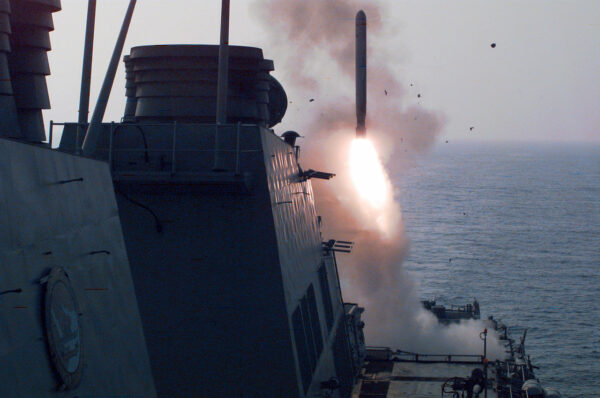
The report states that since the war began in late February, the U.S. has used approximately 1,100 long-range stealth cruise missiles, weapons originally designed for a potential conflict with China. That figure reportedly approaches the total number remaining in the country’s inventory. In addition, more than 1,000 Tomahawk cruise missiles have been launched—roughly ten times the number the U.S. typically purchases in a year.
The scale of the drawdown has forced the military to shift resources from other regions. Munitions have been redirected from both European and Asian commands to sustain operations, a move that has strained those areas’ own capabilities, including surveillance systems. Reports also indicate that missiles and interceptors have been pulled from South Korea to meet demand.
The rapid pace of consumption has sparked concerns about how quickly these resources can be replenished. Senator Jack Reed, a member of the Armed Services Committee, warned that rebuilding what has been used could take years under current production rates. Even that timeline may prove optimistic, as the Pentagon is still awaiting congressional approval to fund expanded weapons manufacturing.
Complicating matters further, a deal struck in January between the administration and defense contractors has yet to result in active production, with funding still pending. The delay highlights the challenges of scaling up military output, even as demand surges during active conflict.
The financial cost of the war has also drawn attention. Some estimates place the daily price tag at around $1 billion, with a significant portion tied directly to munitions. Defense officials indicated that roughly $5.6 billion in weapons was used within just the first two days of fighting. Additional expenses have been incurred from damage to aircraft involved in the conflict.
Despite these concerns, the administration has pushed back strongly against the narrative that U.S. capabilities are being stretched thin. White House Press Secretary Karoline Leavitt dismissed the report’s conclusions, calling its premise false and emphasizing the strength of the U.S. military.
“The United States of America has the most powerful military in the world, fully loaded with more than enough weapons and munitions,” Leavitt said, adding that stockpiles both domestically and abroad remain sufficient to meet operational needs.
Still, the numbers outlined in the report paint a picture of a conflict consuming resources at a remarkable rate. While officials insist the U.S. remains fully prepared, the scale of the expenditures underscores the heavy demands of modern warfare—and raises enduring questions about sustainability when even the most advanced arsenals are tested over time.