
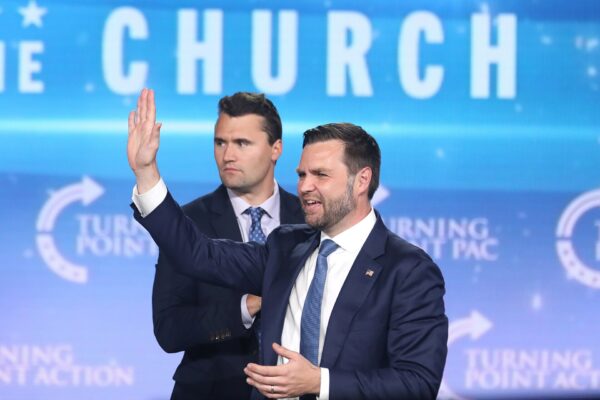
New York Times White House correspondent Maggie Haberman said Sunday that Vice President JD Vance stood apart from President Donald Trump’s other advisers by openly objecting to the war with Iran, arguing that his stance ultimately strained his relationship with the president.
Appearing on NBC’s “Meet the Press,” Haberman said Vance was the only senior adviser who publicly and privately pushed back in a significant way as the administration debated its approach to the conflict.
“Vance was the only one who really vocally took issue with this with Trump. And it irritated Trump, it cost Vance with Trump, but he was the only person who was really sort of rattling the cages,” Haberman said.
She noted that while Vance was the most outspoken, he was not entirely alone in expressing concerns. According to Haberman, other advisers also made arguments against the course of action, including Joint Chiefs Chairman Gen. Dan Caine, who outlined potential consequences if military operations moved forward.
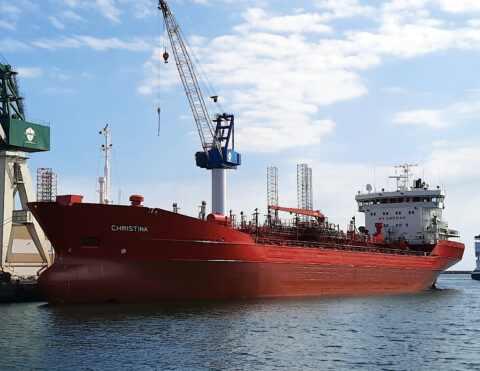
Haberman said Caine presented several scenarios involving the possible depletion of U.S. munitions and warned that Iran could respond by closing the Strait of Hormuz, a critical global shipping route.
“There were other advisers who did make cases against this. We should note that Dan Caine did lay out the scenarios for what could happen, munitions depletion, which clearly the U.S. has seen in a real way despite the fact that the administration keeps insisting otherwise,” Haberman said.
She also disputed President Trump’s repeated assertions that he had not been warned about those risks.
“So, the president will keep saying he wasn’t warned — he absolutely was warned. But Dan Caine is not Mark Milley of Term 1. He is not engaging in these angry arguments with Donald Trump, and you see that play out,” Haberman told guest host Ryan Nobles, contrasting Caine with Trump’s former Joint Chiefs chairman, who frequently clashed with the president.
Haberman and fellow New York Times reporter Jonathan Swan write in their forthcoming book, “Regime Change: Inside the Imperial Presidency of Donald Trump,” that Treasury Secretary Scott Bessent and Energy Secretary Chris Wright were not included in discussions surrounding possible strikes on Iran, despite the potential impact military action could have had on energy markets and the broader economy.
Vance has long expressed skepticism toward foreign military interventions. During an October 2024 interview with comedian Tim Dillon, he warned that a war with Iran would become a “huge distraction” and would also be “massively expensive.”
Despite those previously expressed concerns, Vance has remained publicly supportive of the conflict.
The vice president is now leading negotiations with Iran following a 60-day memorandum of understanding between the United States and Iran intended to reopen the Strait of Hormuz to global shipping. Earlier this month, Trump joked that if the effort to secure a long-term peace agreement ultimately failed, he would blame Vance for the unsuccessful outcome.
Negotiations have faced early obstacles and are scheduled to resume Tuesday after the United States and Iran exchanged fire over the weekend while Tehran sought to assert its authority over the strategic waterway. Continued fighting between Israel and Hezbollah in Lebanon has also complicated diplomatic efforts.
Meanwhile, criticism of the conflict has grown among some former Trump allies. Former Fox News host Tucker Carlson and former Rep. Marjorie Taylor Greene have emerged as outspoken critics of both the president and the Republican Party over the war in the Middle East.
The conflict has also fueled concerns about America’s military readiness, with reports indicating it could take three years or longer to replenish the advanced weapons expended by the United States during the Iran war.