
President Donald Trump issued a stark warning Wednesday, signaling that the path forward with Iran hinges on whether a peace agreement can be finalized—while leaving little doubt about the consequences if it is not.
In a message posted to Truth Social, Trump said that if Iran agrees to terms already under discussion, the conflict could soon come to a close. He described the current military campaign as “Epic Fury,” suggesting it could end if diplomacy prevails. Under such a deal, he indicated that the blockade in the region would remain in place but that the strategically critical Strait of Hormuz could reopen to global shipping, including for Iran.
However, Trump paired that possibility with a blunt alternative. If Iran refuses to accept the agreement, he warned that military action would resume at what he described as a significantly increased level of force. The remark underscored the administration’s dual-track approach—pursuing negotiations while maintaining the threat of escalation.
According to a report from Axios, U.S. officials believe they are nearing agreement with Iran on a concise memorandum that could both end the current hostilities and lay the groundwork for future nuclear negotiations. The reported framework is said to be just one page long, signaling an effort to reach a streamlined understanding rather than a prolonged diplomatic process.
Talks are being conducted through a combination of direct engagement and intermediaries. Among those involved are special envoy Steve Witkoff and Trump adviser Jared Kushner, working alongside Iranian representatives. The involvement of high-level figures suggests the administration views the negotiations as a critical opportunity to bring the conflict to a close.
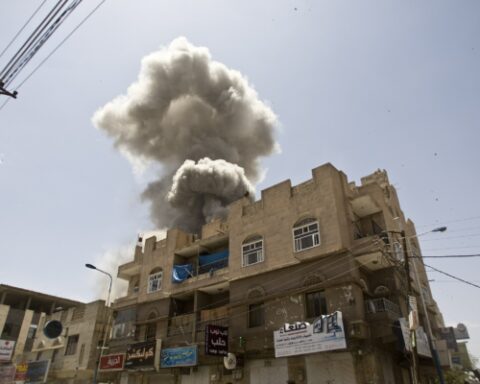
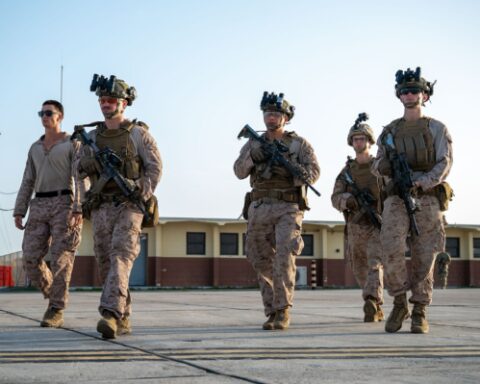
Trump’s latest comments come shortly after he announced a pause in “Project Freedom,” an operation aimed at restoring maritime movement through the Strait of Hormuz. That effort had involved U.S. forces guiding commercial vessels through the narrow waterway despite objections from Iran, a move that led to direct exchanges of fire earlier in the week.
The president said the pause was made at the request of Pakistan and other countries, describing it as a temporary measure to allow time for negotiations to succeed. While ship movements have been halted for now, Trump emphasized that the broader blockade remains fully in effect.
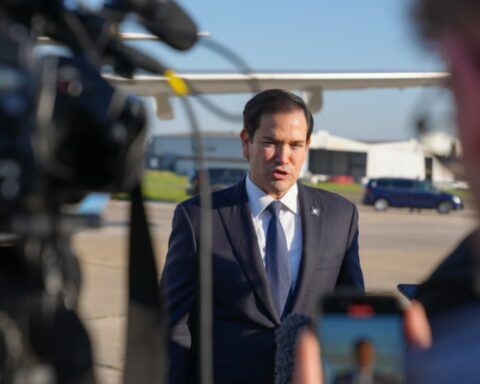
Meanwhile, officials within the administration have offered differing descriptions of the evolving military operations. Secretary of State Marco Rubio stated during a Tuesday briefing that Operation Epic Fury had concluded and been replaced by Project Freedom. At the same time, Defense Secretary Pete Hegseth maintained that a ceasefire between the United States and Iran is still technically holding, despite recent exchanges between the two sides.
The situation reflects a delicate balance: negotiations inch forward even as the machinery of war remains close at hand. While the administration projects confidence that a deal may be within reach, the continued reliance on threats of intensified conflict highlights the high stakes—and the uncertainty—surrounding the outcome.