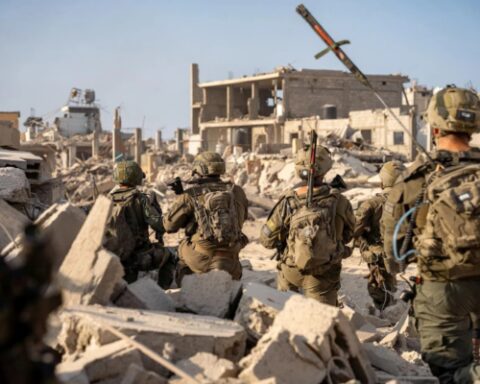

The United States reportedly expended significantly more missile interceptors defending Israel during Operation Epic Fury than Israel itself used, according to a new report from The Washington Post, fueling renewed debate over America’s growing military burden overseas and the long-term strain on U.S. weapons stockpiles.
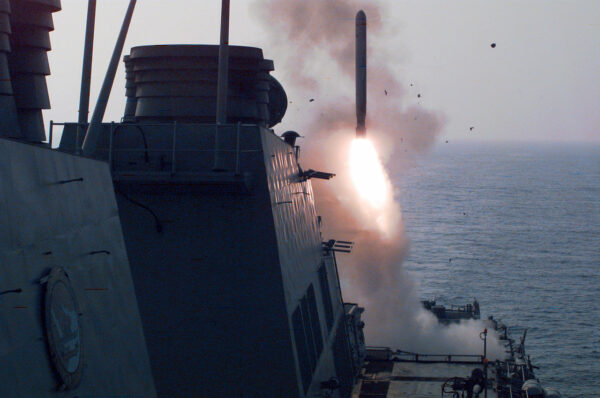
Citing Defense Department assessments and anonymous U.S. officials familiar with the operation, the Post reported Thursday that American forces fired more than 200 THAAD missile interceptors during the conflict — roughly half of the Pentagon’s total THAAD inventory.
In addition to the THAAD systems, U.S. naval vessels stationed in the eastern Mediterranean reportedly launched more than 100 SM-3 and SM-6 interceptors as American forces worked to defend Israel from incoming Iranian missile attacks.
By comparison, the report stated that Israel used fewer than 100 Arrow interceptors and approximately 90 David’s Sling interceptors during the same operation.
One U.S. official told the newspaper that American forces fired roughly 120 more interceptors than Israel and engaged approximately twice as many Iranian missiles.
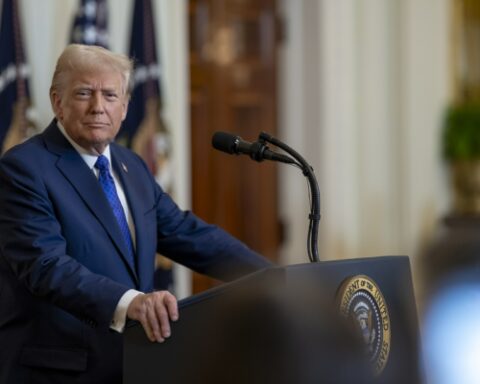
The reported imbalance has intensified scrutiny over the costs and logistics of America’s military commitments abroad, especially as President Donald Trump weighs whether to resume hostilities with Iran if negotiations fail.
“I have instructed Secretary of War, Pete Hegseth, The Chairman of The Joint Chiefs of Staff, General Daniel Caine, and The United States Military, that we will NOT be doing the scheduled attack of Iran tomorrow,” Trump wrote Monday on Truth Social. He added, however, that the military had also been ordered to remain ready for a “full, large scale assault” if an acceptable agreement could not be reached.
Another unnamed U.S. government official quoted by the Post made a blunt assessment of Israel’s military dependence on American support.
“Israel is not capable of fighting and winning wars on its own, but nobody actually knows this, because they never see the back end,” the official reportedly said.
Chief Pentagon spokesman Sean Parnell defended the operation and argued that the burden-sharing between the United States and Israel was balanced overall when considering the broader range of military assets involved.
“Ballistic missile interceptors are just one tool in a vast network of systems and capabilities that comprise a layered and integrated air defense network,” Parnell told the DCNF. He added that both nations employed aircraft, missile defense systems, and counter-drone capabilities “with maximal effectiveness.”
Still, the rapid depletion of American interceptor stockpiles is raising concerns well beyond the Middle East.
According to a report from the Center for Strategic and International Studies, the United States has already used between 45% and 61% of its Patriot missile inventory since the Iran war began. The report estimated that between 1,060 and 1,430 Patriot interceptors out of a total stockpile of 2,330 have now been expended.
That matters not only for ongoing tensions involving Iran, but also for American allies in the Pacific. Japan and South Korea rely heavily on U.S. missile defense systems to deter threats from China and North Korea.
The situation could become even more difficult if fighting resumes. The Post reported that Israel recently took several missile defense batteries offline for maintenance, potentially forcing the United States to shoulder an even greater share of future missile defense operations.
Experts also warned that replacing depleted weapons stockpiles will not happen quickly. The CSIS report stated it could take more than five years to fully replenish certain critical munitions inventories.
Former congressional staffer and geopolitical analyst Brandon Weichert told the DCNF that America’s defense industrial base lacks the capacity to rapidly rebuild what has already been spent.
“The biggest problem is that once they’re gone,” Weichert said, “it will take, if we stop the war tomorrow, around four or more years to replenish all of those systems that we have depleted.”
As Washington debates future military involvement in the region, the report is likely to intensify concerns about how prolonged foreign conflicts can quietly drain American resources, readiness, and strategic flexibility far beyond the battlefield itself.