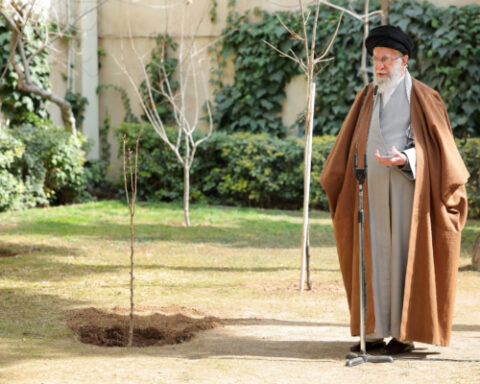

Foreign leaders, government officials and mourners gathered in Tehran on Friday to pay their respects to former Iranian Supreme Leader Ayatollah Ali Khamenei during the opening day of multiday funeral ceremonies following his death in U.S.-Israeli airstrikes on Feb. 28.
Khamenei was killed in strikes that triggered the war with Iran. The funeral events are expected to continue over several days before his burial on July 9.
Among those attending Friday’s ceremony was Pakistani Prime Minister Shehbaz Sharif, who has served as a key mediator in U.S.-Iran negotiations aimed at ending the conflict. Pakistan’s interior minister also traveled to Tehran for the memorial events.
Iran’s top leadership was well represented during the ceremonies, with President Masoud Pezeshkian, Parliament Speaker Mohammad Bagher Qalibaf, Judiciary Chief Gholam-Hossein Mohseni-Eje’i and Foreign Minister Abbas Araghchi all in attendance.
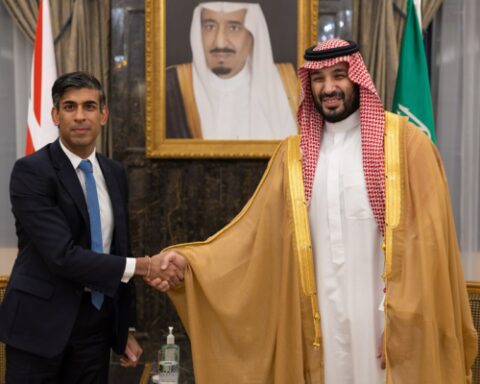
Delegations from numerous countries also traveled to the Iranian capital to participate in the funeral observances. Officials from Qatar, Oman, Saudi Arabia, Iraq, Cuba and Serbia were present to pay their respects.
Russia was also expected to be represented. According to Kremlin spokesman Dmitry Peskov, former Russian President and current Security Council Deputy Chairman Dmitry Medvedev was scheduled to attend Friday’s ceremony.
Additional delegations from China, Namibia, Afghanistan and Turkmenistan met with Iran’s president in Tehran as part of the funeral events. An official delegation from India also attended, along with Turkmenistan National Leader Gurbanguly Berdimuhamedow.
The Iranian government praised the presence of foreign dignitaries, describing their attendance as a show of “solidarity against recent US-Zionist aggressions.” Officials also referred to Khamenei as the “martyred Leader of the Islamic Revolution,” portraying the longtime supreme leader as a respected and widely supported figure.
The funeral comes as Iranian officials continue negotiations with the United States focused on reopening the Strait of Hormuz and bringing an end to hostilities in the region. Those negotiations have taken place following a series of retaliatory strikes involving the United States, Iran and Israel during a fragile ceasefire agreement.
Friday’s ceremony was held at the Grand Mosalla in Tehran, a large prayer complex where Khamenei frequently delivered major public addresses throughout his 37 years as Iran’s supreme leader.
Iranian officials also issued a warning to the United States and Israel ahead of the funeral proceedings, cautioning against any military action during the ceremonies.
“We warn the enemies of Iran, especially the U.S. and the Zionist regime, to avoid any miscalculation and to think about the harsh retaliation our armed forces would make to any threat and aggression against our country,” said Ali Abdollahi, commander of Khatam al-Anbiya.
According to The New York Times and Iranian state media, Khamenei’s casket was placed alongside the coffins of family members who were also killed during the U.S.-Israeli airstrikes.
Those reported to have died in the attack included Khamenei’s daughter, son-in-law, daughter-in-law and young granddaughter.
His son, Mojtaba Khamenei, was severely wounded in the strikes. He was later named Iran’s next supreme leader, though he remains in hiding.
Khamenei is scheduled to be buried on July 9 following the conclusion of the funeral ceremonies, which are expected to draw large numbers of Shiite Muslim mourners from Iran as well as Iraq, Lebanon and Pakistan.
[READ MORE: Reports Say U.S. Warned Iran of Alleged Israeli Threat Against Top Negotiators During Ceasefire Talks]