
Several major American companies signed oil, energy, and business agreements with Iraq on Friday, just days after President Donald Trump said the United States and Iraq would be “doing a lot of deals” because of the Middle Eastern nation’s vast oil resources.
The agreements were announced during an event hosted at the U.S. Chamber of Commerce and involved a number of prominent U.S. firms across the energy and technology sectors.
Among the energy companies participating were Chevron, ConocoPhillips, HKN Energy, and Halliburton.
Chevron signed agreements related to the development of Iraqi oil fields as well as a potential cross-border pipeline connecting Iraq and Syria.
ConocoPhillips entered into one agreement concerning the potential exploration of a gas field and another to join BP in the development of an Iraqi oil field.
HKN Energy also signed a contract covering oil field development and production.
In addition to the energy sector, several agreements involved companies operating in other industries. Those firms included Cisco, JPMorgan, Starlink, and PepsiCo.
According to the article, some of the announced agreements were preliminary in nature, nonbinding, or established frameworks for future discussions rather than final contracts.
Speaking at the event, Energy Secretary Chris Wright said the agreements reflect a broader goal of expanding economic cooperation throughout the region.
“Our goals in the Middle East are to transform a region that’s been riven by too much conflict and diffuse those conflicts and replace them with commerce,” Wright said.
U.S. Chamber of Commerce President and CEO Suzanne Clark said the collection of agreements announced Friday carries a combined value of more than $60 billion.
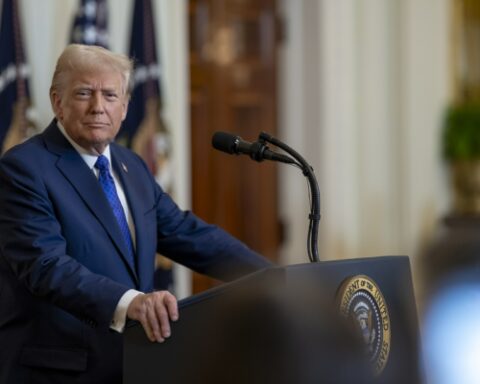
The business announcements came shortly after President Trump hosted Iraq’s newly elected prime minister, Ali al-Zaidi, at the White House earlier in the week.
During their Oval Office meeting, Trump praised Iraq’s energy resources and expressed optimism about strengthening the relationship between the two countries.
“They have tremendous oil reserves. They have tremendous potential wealth, and they have tremendous wealth, not only potential,” Trump said.
The president also voiced confidence in Iraq’s new leader.
“We’re going to have a long-term relationship with a man that will be a great leader. You mark my words. I knew what I was doing,” Trump said, referring to his endorsement of al-Zaidi.
Both leaders highlighted the importance of economic cooperation during their remarks.
“The most important strategic partnership in the world is the United States of America,” al-Zaidi said. “It’s not emotional; it’s about money.”
Trump echoed that sentiment while emphasizing Iraq’s energy resources as a key component of the growing partnership.
“Because of their oil, and we’re going to be doing a lot of deals,” Trump said.
He added that the agreements would create economic opportunities in both countries.
“We’re going to create a lot of jobs for both countries, and we’re going to be taking out a lot of oil,” Trump said.
The article notes that oil has been a major focus of the Trump administration’s foreign policy. It also states that the administration has pursued policies involving Venezuela, whose oil, according to the article, the United States appears to have taken control of after capturing leader Nicolás Maduro.
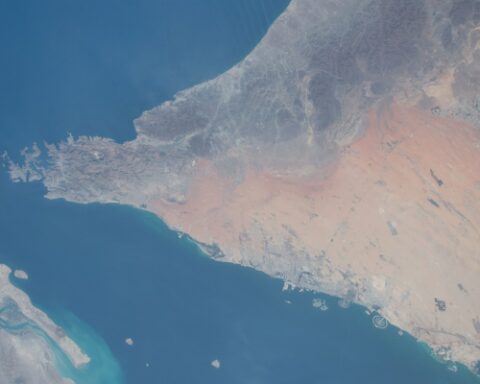
Iraq remains one of the world’s leading energy producers and possesses the fifth-largest proven crude oil reserves globally, making it a significant partner for future energy development and investment.