
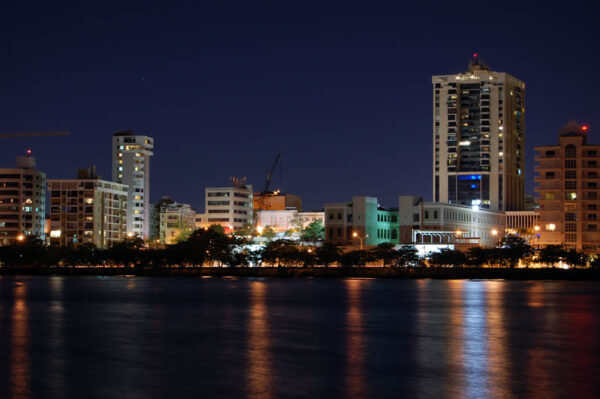
Puerto Rico is preparing to implement widespread water rationing as an ongoing drought continues to strain resources across the U.S. territory, with officials warning that weather conditions could worsen before any relief arrives.
Beginning Friday, more than 180,000 customers in San Juan and several surrounding municipalities will experience 48-hour water shutoffs on an alternating schedule. Authorities say the measures are necessary as the island faces increasingly severe drought conditions alongside persistent extreme heat warnings.
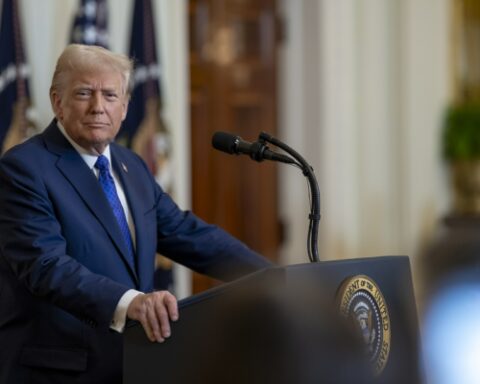
Gov. Jenniffer González addressed the growing crisis late Tuesday, saying the circumstances are being driven by weather conditions beyond the government’s control.
“This situation is out of our hands,” González said, adding that “nothing prevents this from worsening.”
The announcement comes after July became the driest month ever recorded in San Juan in more than 120 years. It also ranked as the capital’s second hottest July on record. According to the U.S. Drought Monitor, nearly one-quarter of Puerto Rico is now experiencing severe drought conditions, while another 36 percent of the island is classified as being under moderate drought.
Meteorologist María Novoa García of the National Weather Service in San Juan said forecasters had anticipated a milder 2026 hurricane season and warned that dry conditions are expected to continue through at least September.
She also said rainfall over the next two to three weeks is expected to be at least 50 percent below normal. Novoa García pointed to a natural warming cycle, saying, “We are seeing that El Niño continues to get stronger.”
The water rationing will affect neighborhoods in San Juan as well as parts of Carolina, Juncos, Gurabo, Trujillo Alto, Canóvanas and Loíza. González said she could not provide a timeline for when the restrictions might be lifted.
To help residents cope with the shortages, Luis González Delgado, president of Puerto Rico’s water and sewer system, said large trucks will deliver potable water throughout affected communities. Hospitals and residences housing older individuals will receive priority for those deliveries.
Health officials also sought to reassure the public that medical facilities are prepared to handle the emergency.
Tania Conde Sterling, president of Puerto Rico’s Association of Health Services Administrators, said hospitals have established procedures in place for situations like the current drought.
“We do not improvise at hospitals,” she said. “We have manuals of rules and procedures, as well as protocols for every type of scenario.”
Still, many residents say water shortages have been affecting their daily lives long before the current drought intensified.
Marcia Soler París, a 61-year-old community leader, said her neighborhood has already been dealing with serious water interruptions for months, making the newly announced rationing seem largely symbolic.
“It’s chaos,” she said, questioning how residents are expected to prepare for scheduled shutoffs when many already go without running water. She described the situation as “truly pitiful” and said she is especially concerned about bedridden and elderly residents who are unable to carry heavy buckets of water.
The longstanding water problems have already prompted legal action. San Juan Mayor Miguel Romero sued Puerto Rico’s Water and Sewer Authority in late May over chronic water shortages that were not linked to the current drought.
Gov. González has acknowledged that the authority’s infrastructure has suffered from decades of inadequate maintenance and underinvestment. Meanwhile, Puerto Rico Representative Domingo J. Torres García warned Wednesday that he would pursue legal action if the water authority failed to provide a satisfactory response regarding the ongoing disruptions affecting residents.