
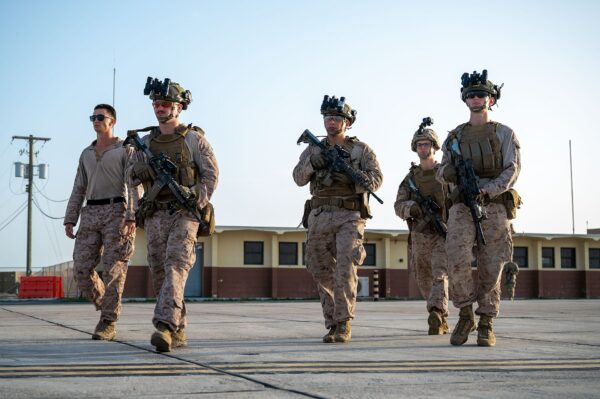
The U.S. Army Reserve is reportedly assessing whether it can supply U.S. Southern Command with military police, medical teams and other support units within the next four months, according to an internal Army message reviewed by CBS News.
The message itself does not mention Cuba. But multiple U.S. officials, speaking anonymously because they were not authorized to discuss the matter publicly, told CBS News the request is tied to ongoing military planning focused on the communist-run island.
The planning comes as the Trump administration ramps up economic pressure on Havana and presses the regime to adopt political reforms. Nothing in the document indicates any units have received deployment orders.
According to the message, Army Reserve headquarters is asking subordinate commands whether six types of formations could be made available under Southern Command, whose territory spans Central and South America and the Caribbean. The units could “possibly [be] needed in 90-120 days,” the message states, with feedback due by Sept. 25. It does not specify troop numbers, destinations or the operation they would support.
The requested units include a combat sustainment support battalion to coordinate transportation, maintenance, fuel and supply; an engineer battalion; and an expeditionary sustainment command to oversee logistics across a theater of operations. The message, generated last week, also seeks a medical brigade, a forward resuscitative and surgical detachment to deliver emergency surgery and trauma care closer to U.S. forces, and a military police brigade, which typically oversees security, detention and law enforcement missions.
The Army Reserve did not respond to CBS News before publication. A Southern Command spokesperson declined to discuss potential movements or timelines, citing operational security, but said the command continuously coordinates with the Joint Force to assess possible requirements across its region.
The move follows earlier preparations. This year, U.S. forces conducted reconnaissance of the seafloor and maritime approaches around Cuba, and American airpower components were placed on heightened readiness to pre-stage personnel, multiple U.S. military personnel said. Those plans did not come to fruition.
In May, CBS News reported intelligence officials were studying how Cuba might respond to U.S. military action, as the administration accused Havana of strengthening ties with Russia, China and Iran. In July, planners reportedly examined options including an air assault by thousands of soldiers from the 101st Airborne Division, though officials stressed no decision had been made.
The effort fits what officials have dubbed the “Donroe Doctrine,” the president’s push to limit foreign adversaries in the Western Hemisphere. U.S. forces have assisted Ecuadorian operations against cartel networks, and since September the military has killed more than 230 people in 70 strikes in the Caribbean and eastern Pacific — strikes some legal experts argue are illegal.
Ahead of this week’s U.N. General Assembly, the administration sanctioned Cuban entities and officials, including military enterprises tied to the nickel industry. At the U.N., Trump predicted Cuba’s communist government “will fall” and said Secretary of State Marco Rubio was “deep into negotiations” with Havana. The Cuban delegation walked out.
Cuban President Miguel Díaz-Canel has vowed to counter any U.S. attack and accused Washington of “economic warfare” over blocked oil imports.
Trump, for his part, has been blunt. “Cuba’s going to be next,” he said in March.